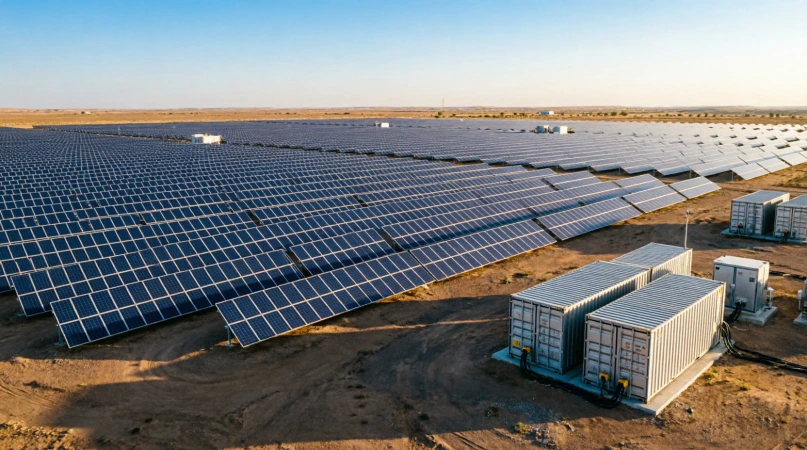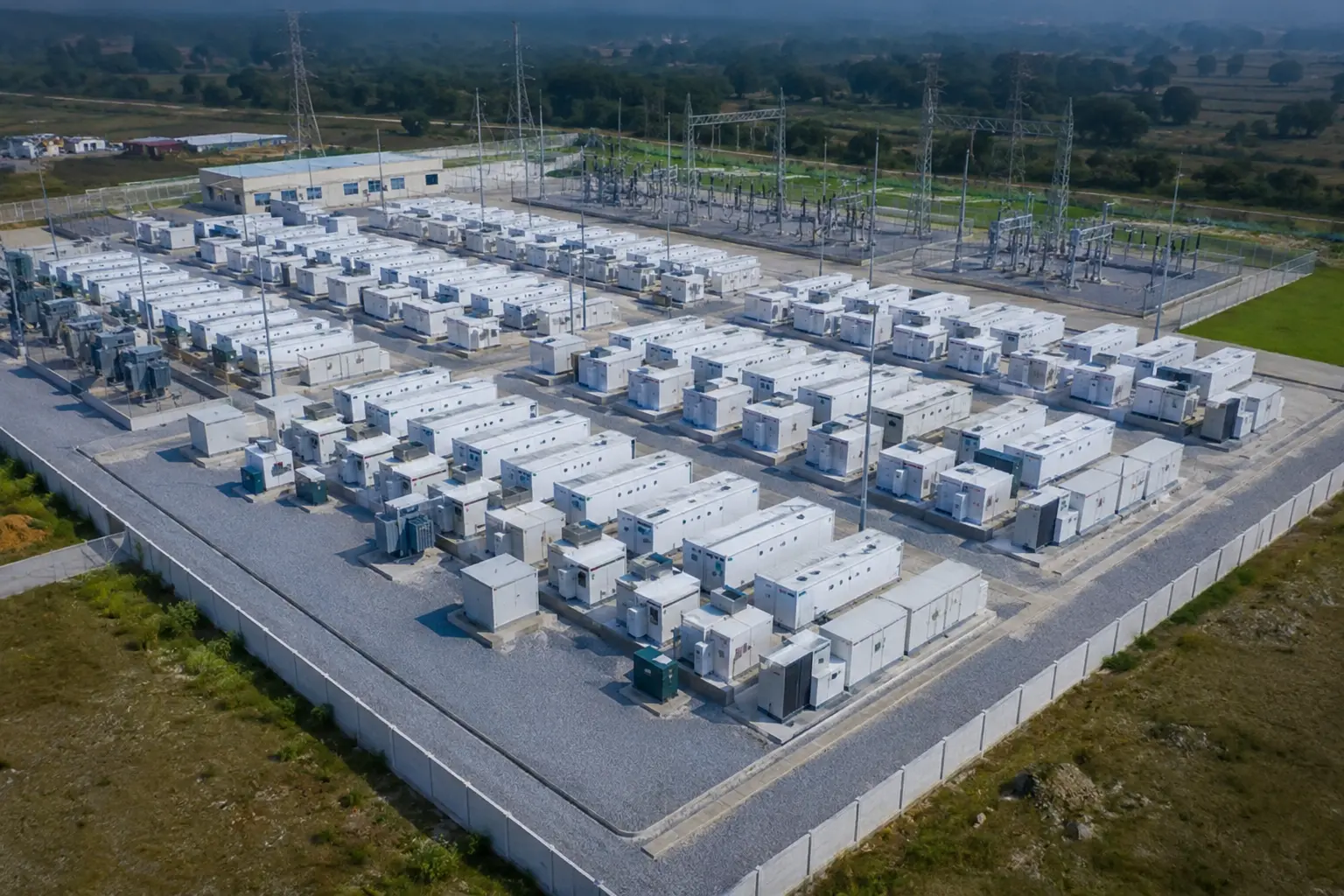
INDIA —Adani Green Energy Ltd (AGEL), India's largest renewable energy developer by operational capacity, has brought online a cumulative 3.37 gigawatt-hour Battery Energy Storage System (BESS) at its Khavda site in Gujarat. The figure includes 1.37 GWh commissioned in March 2026, with the entire facility delivered within 10 months of on-site construction start, according to official disclosures. The asset is positioned as the world's largest single-location battery storage installation outside China and among the fastest utility-scale deployments executed globally.
AGEL is a publicly listed entity focused on utility-scale solar, wind, and hybrid renewable power projects across India. The company is currently developing 30 GW of renewable capacity at Khavda, of which 9.9 GW is already operational. The new storage capacity can supply enough energy to meet peak electricity demand equivalent to a mid-sized Indian city or a small state for a day, based on internal estimates. The deployment integrates lithium-ion battery technology with advanced energy management systems designed to optimize grid responsiveness and dispatchability. The commissioning carries implications for grid operators and industrial consumers seeking firm, round-the-clock renewable power.
By mitigating generation variability caused by weather or seasonal factors, utility-scale storage can improve grid stability and reduce dependence on thermal balancing plants. For electricity distribution companies and large commercial off-takers, the expansion of dispatchable clean energy capacity may support procurement strategies that blend solar and wind with storage to meet renewable purchase obligations. AGEL has outlined plans to add over 10 GWh of storage in the fiscal year beginning April 2026, scaling to 50 GWh over the next five years. The scale of the roadmap signals a structural shift in India's power infrastructure investment toward storage-linked generation.
Equipment suppliers, engineering firms, and battery manufacturers servicing the utility-scale segment may see accelerated demand, while policymakers and regulators may reference such deployments when framing market mechanisms for ancillary services and capacity payments. The project reinforces Gujarat's role as a hub for integrated renewable energy and storage infrastructure.