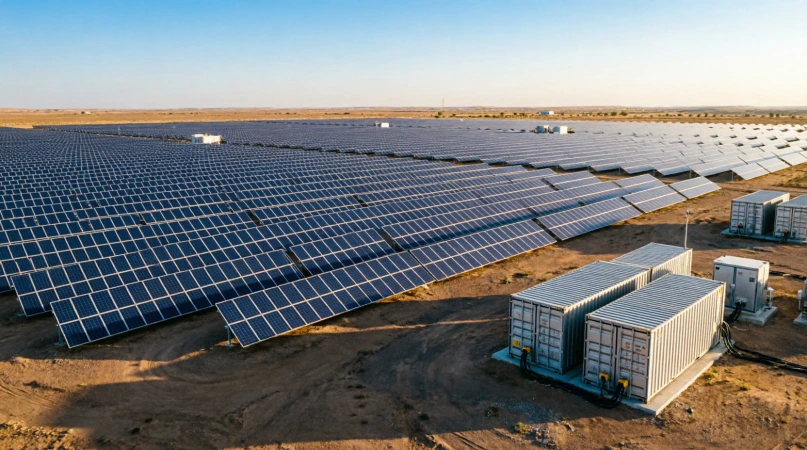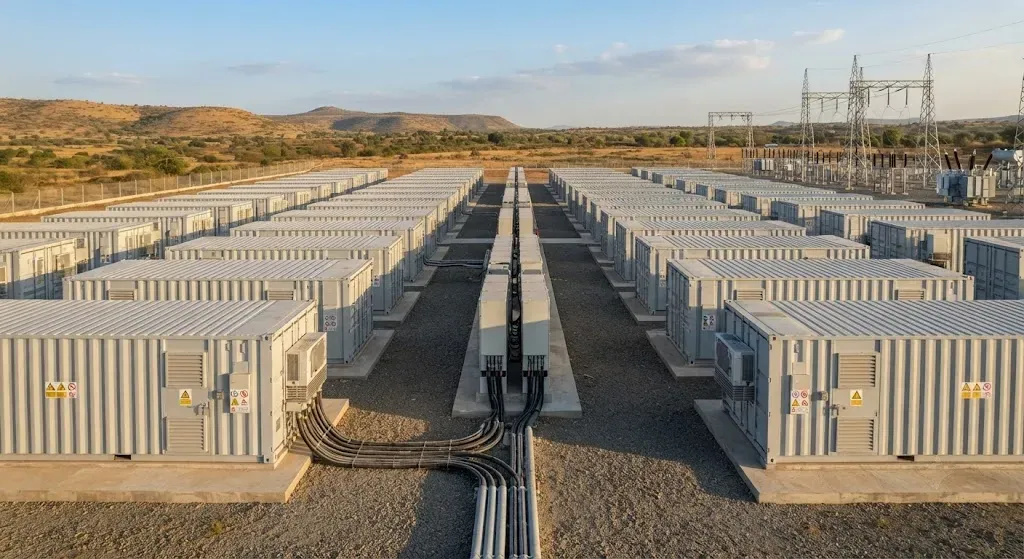
INDIA —Adani Green Energy Limited (AGEL) expanded its operational battery energy storage capacity to 6.63 gigawatt-hours at its primary generation hub in Khavda, Gujarat, up from 3.55 gigawatt-hours recorded in June 2026. This additional capacity commissioned over a ten-month construction window elevates the site to the world's largest single-location energy storage installation. With this deployment, the enterprise holds more than half of India's total operational battery storage assets, which stand at approximately 12.6 gigawatt-hours countrywide.
Adani Green Energy Limited (AGEL) is an India-based utility-scale renewable power company that develops, owns, and operates solar, wind, and hybrid energy assets. The organization currently maintains an operating generation portfolio of 20.76 gigawatts alongside its battery storage facilities across 12 Indian states, targeting 50 gigawatts of total capacity by 2030. Its flagship Khavda project in Gujarat encompasses a 30-gigawatt renewable energy plant situated across 538 square kilometers.
Integrating multi-gigawatt-hour battery systems addresses the structural intermittency associated with solar and wind generation. By storing off-peak energy and dispatching power during period peaks, large-scale battery systems reduce grid frequency fluctuations and limit power curtailment. The 6.63 gigawatt-hour facility can deliver continuous power to support urban centers and heavy industrial infrastructure, bridging supply gaps during low-generation periods.
This development impacts regional power distribution networks, renewable equipment manufacturing, and industrial energy consumers across India. Power utilities gain greater operational flexibility to manage base-load requirements without relying exclusively on thermal generation. Furthermore, the deployment establishes a operational framework for integrating utility-scale lithium-ion battery architectures, advanced energy management platforms, and automated telemetry within national power grids.
From a market perspective, scaling battery storage infrastructure enhances the commercial viability of round-the-clock renewable power supply agreements. The installation supports long-term national decarbonization targets by providing firm, dispatchable clean energy to corporate off-takers and regional utilities. Looking ahead, expanding storage capabilities positions clean energy developers to secure long-term capacity contracts while reducing exposure to spot market price volatility.