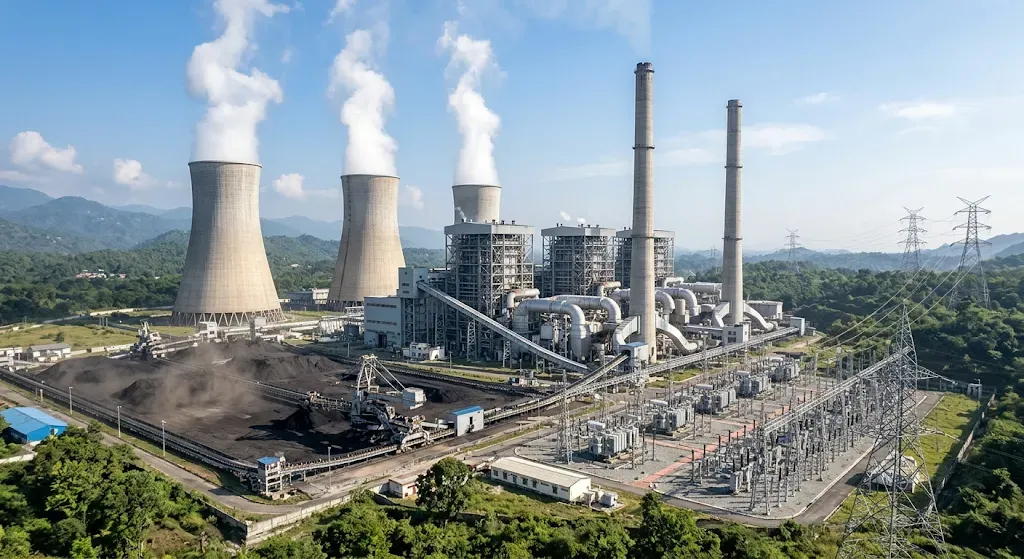
INDIA —Adani Power has finalized a long-term 25-year agreement to supply 1,234 MW of net ex-bus thermal electricity to the Uttarakhand Power Corporation Limited (UPCL). The arrangement originates from a competitive tender issued by the state distribution utility, in which the generation enterprise emerged as the winning bidder for a total installed capacity of 1,320 MW. Adani Power is a prominent Indian private thermal power producer operating extensive generation assets across multiple states. This multi-decade commitment establishes long-term revenue visibility for the supplier while securing steady base-load energy availability for the state utility.
Long-term power purchase commitments of this scale are critical for stabilizing state-level grid operations and mitigating spot-market volatility for distribution companies. By locking in capacity over a 25-year horizon, Uttarakhand ensures reliable electricity supply to meet rising domestic and commercial demand profiles. Concurrently, the contract provides the generation developer with guaranteed off-take, reducing cash flow uncertainties and supporting predictable financial performance across economic cycles.
This development directly impacts the utility sector, regional distribution networks, and industrial energy consumers within northern India. State-level electricity regulators and municipal distribution companies closely monitor such long-term bilateral contracts as benchmarks for future tariff determinations and capacity procurement. Furthermore, thermal power equipment manufacturers and fuel supply logistics providers observe these utility-scale agreements to gauge ongoing demand for coal-fired generation infrastructure.
For market investors and corporate strategists, the multi-decade agreement underscores the ongoing reliance on traditional thermal generation to fulfill baseline energy requirements alongside intermittent renewable sources. Securing high-capacity off-take agreements strengthens the operational footprint of major private utilities within regulated state frameworks. Market participants will evaluate how similar state-level tenders balance long-term tariff predictability against evolving environmental mandates and grid modernization objectives.