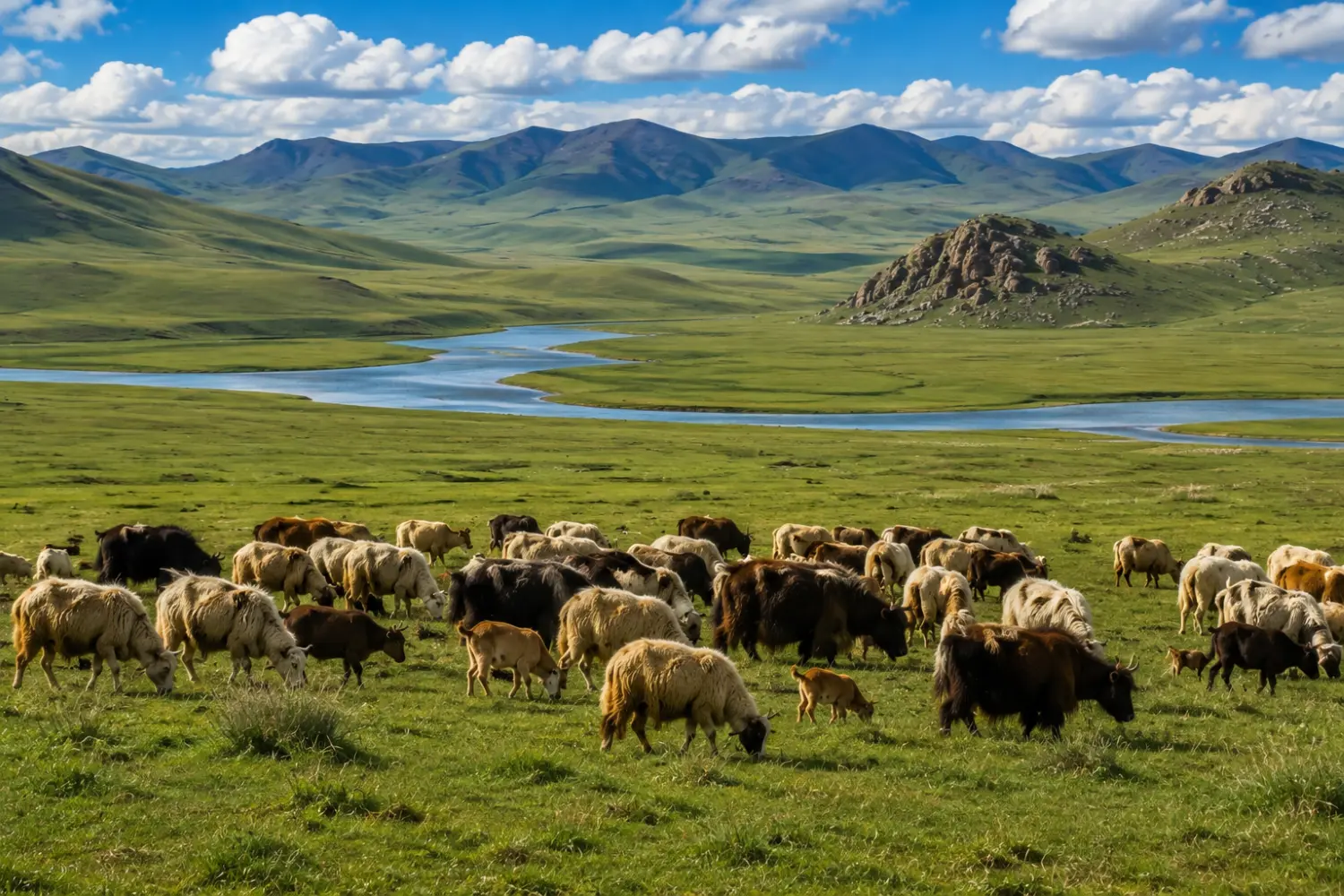
MONGOLIA —The Asian Development Bank (ADB) has introduced the Green Inclusive Regional Agribusiness Fund (GIRAF) to expand financial access across Mongolia's pastoral economy. Financed through a $92.6 million allocation from the Green Climate Fund (GCF) alongside an anticipated $25 million in commercial banking co-financing, the targeted capital vehicle addresses chronic funding shortfalls for herder cooperatives, microenterprises, and small to medium-sized agricultural ventures. Initial deployment will see $37.5 million distributed to rural businesses, including $3 million allocated as direct innovation grants.
This financial intervention targets systemic vulnerabilities in Mongolia's agricultural sector, where rangeland degradation and extreme weather patterns increasingly threaten traditional livestock operations. By delivering low-cost loans and risk-mitigating credit guarantees, the fund lowers capital barriers for rural entities adopting sustainable rangeland practices. Preferential financing access is tied to commercial structures that integrate herder communities directly into broader supply chains, ensuring equitable economic distribution while reinforcing climate resilience across fragile ecosystems.
The initiative introduces digital traceability systems powered by remote-sensing and geospatial monitoring to evaluate the environmental and socioeconomic performance of funded projects. This technical oversight framework provides institutional lenders and impact investors with verifiable metrics on land restoration, carbon sequestration, and operational efficiency. Over the next decade, the fund aims to finance approximately 500 small and medium-sized enterprises and cooperatives, together with 1,000 rural micro-enterprises.
Established in 1966 and headquartered in Manila, Philippines, the Asian Development Bank (ADB) is a regional development financial institution dedicated to reducing poverty and promoting sustainable economic growth across Asia and the Pacific. The Green Climate Fund, headquartered in Incheon, South Korea, operates as a global fund under the United Nations Framework Convention on Climate Change, assisting developing countries in responding to climate change challenges.