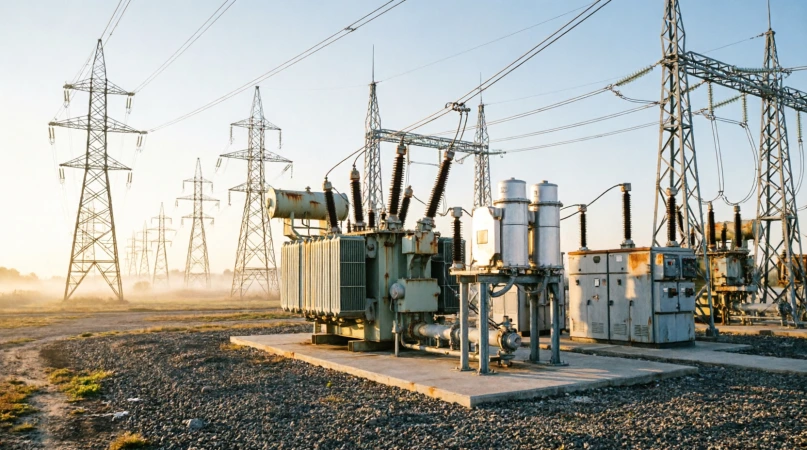
UZBEKISTAN —The Asian Development Bank (ADB) has finalized a USD 200 million debt financing agreement aimed at upgrading the electrical distribution infrastructure in Uzbekistan. Executed alongside bilateral government discussions in Bangkok, the initiative targets the overhaul of sixty high-priority electrical substations while integrating digital management frameworks across the national distribution grid to mitigate technical losses and improve grid reliability.
Headquartered in Mandaluyong, Philippines, the Asian Development Bank (ADB) is a multilateral development institution owned by 69 member nations, focused on fostering sustainable economic growth and poverty reduction throughout Asia and the Pacific. Established in 1966, the organization utilizes loans, technical assistance, and equity investments to support critical infrastructure projects and policy reforms across developing member states.
This capital injection addresses acute systemic strains driven by rapid urbanization, industrial expansion, and surging domestic power consumption. Aging legacy assets and network bottlenecks have previously constrained service reliability and limited the grid capacity required to absorb expanding commercial green energy projects. By deploying advanced network oversight and rehabilitating obsolete hardware, the initiative directly targets system inefficiencies.
The program serves as a foundational milestone for bilateral cooperation, marking the initial energy sector engagement executed under a shared coordination framework between the multilateral lender and the World Bank. Parallel co-financing arrangements are slated for executive board review, which will introduce complementary capital to scale structural interventions across regional utility networks and reinforce long-term operational capabilities.
For regional stakeholders, energy developers, and industrial operators, the modernization initiative directly supports national decarbonization trajectories by facilitating the integration of over three gigawatts of new renewable generation capacity. Enhanced network resilience minimizes localized brownouts and voltage fluctuations, securing a stable power supply for commercial enterprises while cutting annual carbon dioxide emissions by nearly 23,000 metric tons.