
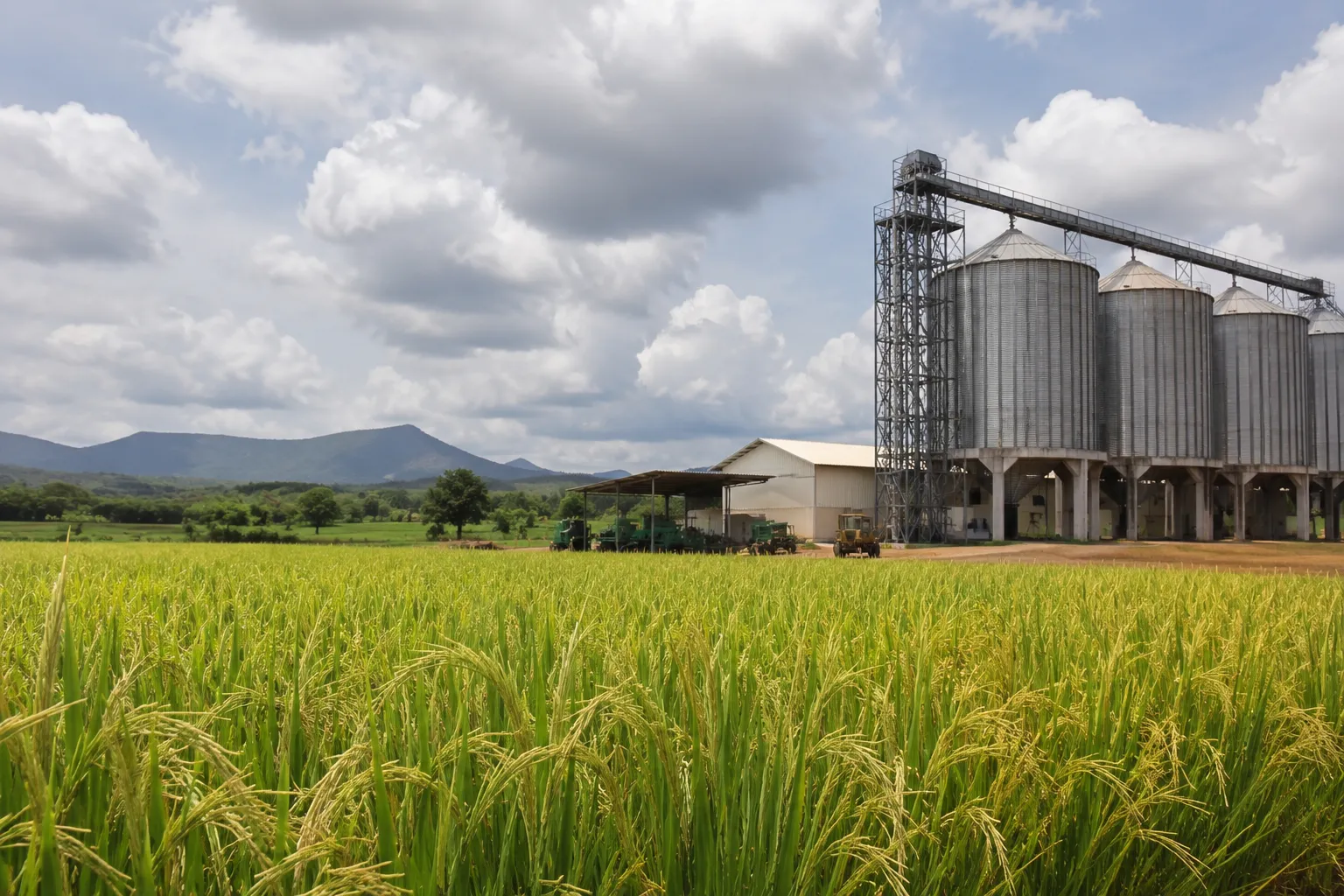
The African Development Bank has approved an $18.8 million grant to Ghana under the REWARD initiative to combat rice import dependency. Focused on climate-resilient infrastructure and processing in the Northern Savannah, the project aims to bolster food security, stabilise prices, and attract private agribusiness investment.
Ghana's vulnerability to global rice price fluctuations and supply chain interruptions, driven by a persistent gap between domestic production and consumption, has prompted a targeted multilateral response. Official disclosures from the African Development Bank (AfDB) Group confirm the approval of an $18.8 million grant to the Government of Ghana, specifically allocated to the implementation of the Regional West Africa Resilient Rice Value Chains (REWARD) project. This financial intervention is designed to fundamentally address the structural inefficiencies that have historically constrained the country's rice self-sufficiency objectives.
The REWARD project is structured to deliver a comprehensive upgrade to Ghana's rice production ecosystem. Investment priorities include the deployment of climate-resilient agricultural systems, expanded access to high-quality inputs and mechanisation, and significant enhancements to irrigation networks and land development. These measures are targeted at reversing the productivity stagnation that has left local output trailing behind consumption growth, thereby perpetuating reliance on foreign suppliers. The project explicitly aims to improve market systems and elevate the competitiveness of domestically produced rice against cheaper, often subsidised, imports.
A central component of the initiative involves the modernisation of rice processing facilities, a critical bottleneck that has historically diminished the quality and market value of local paddy. By coupling this with the establishment of stronger market linkages, the programme seeks to incentivise greater private sector participation across the value chain—from aggregation and milling to distribution and retail. The operational focus will be on selected districts within Ghana's Northern Savannah Ecological Zone, a region endowed with significant agricultural potential but constrained by climate variability, inadequate infrastructure, and fragmented market access.
The bank's Country Manager for Ghana contextualised the intervention as a strategic lever for strengthening agribusiness, improving rural livelihoods, and fostering inclusive growth. This aligns with the government's broader Feed Ghana Programme, which prioritises agricultural transformation as a cornerstone of national economic resilience. For the African Development Bank, the grant advances its institutional priorities encompassing climate-resilient agriculture, private sector enablement, and inclusive growth, while contributing to regional efforts to stabilise food systems across West Africa.
The strategic significance of this approval extends beyond immediate production metrics. For Ghana, reducing rice imports directly mitigates foreign exchange pressure and insulates domestic consumers from international price volatility—a factor that has become increasingly critical given recent global food inflation trends. For agribusiness investors and commodity traders, the project signals a de-risked environment for upstream and midstream agricultural ventures, particularly in mechanisation services, irrigation technology, and processing equipment supply. Furthermore, the emphasis on the Northern Savannah zone opens avenues for infrastructure development and logistics providers to support integrated value chain operations.
Regional implications are also pronounced. As a member of the Economic Community of West African States (ECOWAS), Ghana's progress in boosting rice output contributes to the bloc's broader objective of reducing extra-regional cereal imports. Success in this project could create a replicable model for other West African nations facing similar agricultural challenges, potentially attracting further development finance to the region's agricultural transformation agenda. For multinational commodity traders and food processors, a more competitive domestic rice market in Ghana could alter regional supply-demand balances, influencing sourcing strategies and price benchmarks in the medium term.
The African Development Bank Group, established in 1964, is a premier multilateral finance institution comprising 81 member states. Its mandate is to mobilise resources for sustainable economic development and social progress across its regional member countries, with a current strategic focus on accelerating the continent's energy transition, industrialisation, and food sovereignty. This grant represents a tangible manifestation of that strategic pivot towards building resilient agricultural infrastructure in high-impact geographies.
About GlobeNewsInfo
GlobeNewsInfo.com is a business news platform providing latest updates on global business developments, projects, and contract opportunities across diverse sectors and regions. The platform is designed to serve as a trusted source of information for companies, investors, and professionals worldwide.