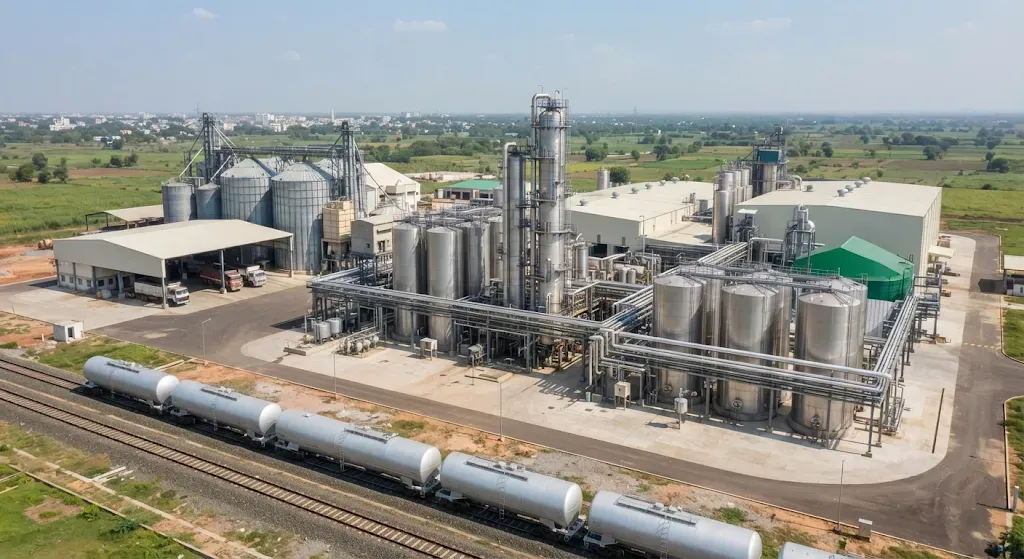
BRAZIL —The Asian Infrastructure Investment Bank (AIIB) has finalized a USD 70 million loan agreement with Fueling Sustainability (FS) to fund a fourth corn-based bioethanol plant in Campo Novo do Parecis, located in Brazil's central-western state of Mato Grosso. Once operational, the site is projected to add 580 million liters in annual ethanol output. Established in 2016 and headquartered in Beijing, AIIB operates as a multilateral development bank with a USD 100 billion capital base, AAA credit ratings, and 111 approved members worldwide. Fueling Sustainability (FS), founded in 2017 and based in São Paulo, focuses on second-crop corn ethanol production alongside animal feed ingredients and biomass-derived power, running three industrial facilities with two additional units under construction in Mato Grosso.
This transaction represents AIIB's debut direct corporate financing in both Brazil and Latin America, signaling a geographic push beyond its traditional Asian core. With this lending facility, AIIB's portfolio in Brazil reaches 10 approved operations totaling nearly USD 2 billion across energy, digital infrastructure, and multi-sector projects. For Latin American project sponsors, the move introduces an additional multilateral lender capable of pairing development mandates with commercial corporate finance.
Within the biofuels and agricultural value chain, the expansion affects corn growers, ethanol producers, agricultural input suppliers, and low-carbon fuel buyers in central-western Brazil. By scaling domestic ethanol supply in a major agricultural state, the project intersects with national decarbonization policies and transport fuel blending dynamics. It also highlights how development finance institutions are increasingly channeling capital into agro-industrial processing tied to emissions reduction targets.
For corporate borrowers and institutional investors, AIIB's entry into Latin American corporate lending expands the pool of development-backed capital available for green industrial assets and private capital mobilization. Companies developing low-carbon energy or processing infrastructure in emerging markets may find new co-financing avenues alongside commercial banks. At the same time, lenders and sponsors must navigate commodity feedstock exposure, regulatory standards for sustainable biofuels, and execution risks tied to large-scale industrial construction.