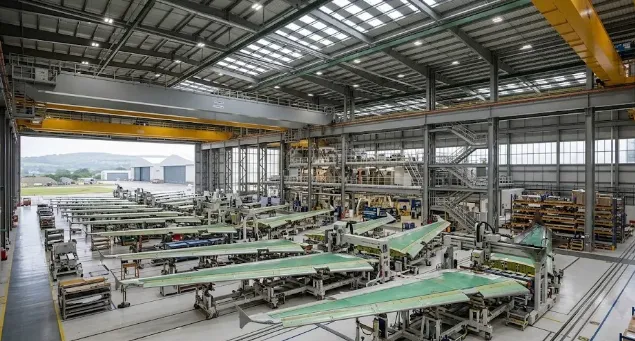
UNITED KINGDOM —Airbus is expanding its UK industrial footprint with a £150 million investment to transform a former A380 wing production plant in Broughton into an assembly facility dedicated to the A321 line. The upgraded site will feature six production jigs, an equipping line and a paint shop designed to support the manufacturer's global production targets. The site overhaul will generate roughly 480 high-value jobs across Broughton in 2026, including 250 roles specifically within the modernized factory, adding to the existing 6,000-person workforce.
Airbus is a European multinational aerospace corporation that designs, manufactures, and sells commercial aircraft, defense systems, and space products worldwide. As one of the global aerospace industry's leading original equipment manufacturers, the group operates major industrial, design, and manufacturing facilities across Europe, North America, and Asia.
The investment addresses a severe operational bottleneck in the commercial aviation sector, where aircraft manufacturers face substantial backlogs driven by strong global demand for single-aisle jets. The A320-family backlog stands at approximately 7,500 units, with A321 variants representing roughly 75 percent of those orders. By converting legacy infrastructure previously built for large-aircraft production, Airbus can scale up wing output without building entirely new facilities from scratch, lowering capital expenditures and reducing setup timelines.
This development reinforces the UK's status as a critical manufacturing hub within European aerospace supply chains, securing long-term high-skilled engineering jobs in Wales. The specialized equipment and reconfigured floor plans will feed into the broader assembly network, directly supporting the company's objective to reach a global monthly production rate of 75 single-aisle aircraft. The investment complements similar industrial expansion initiatives across Airbus' UK network, including structural upgrades at its Belfast site for composite wing manufacturing.
For commercial airlines and aircraft leasing companies, increased wing production capacity is an essential prerequisite for resolving delivery delays and modernizing fleets with fuel-efficient narrowbody aircraft. The transition highlights a continued strategic pivot among major aerospace primes toward high-volume single-aisle platforms and adaptive reuse of heavy industrial real estate.