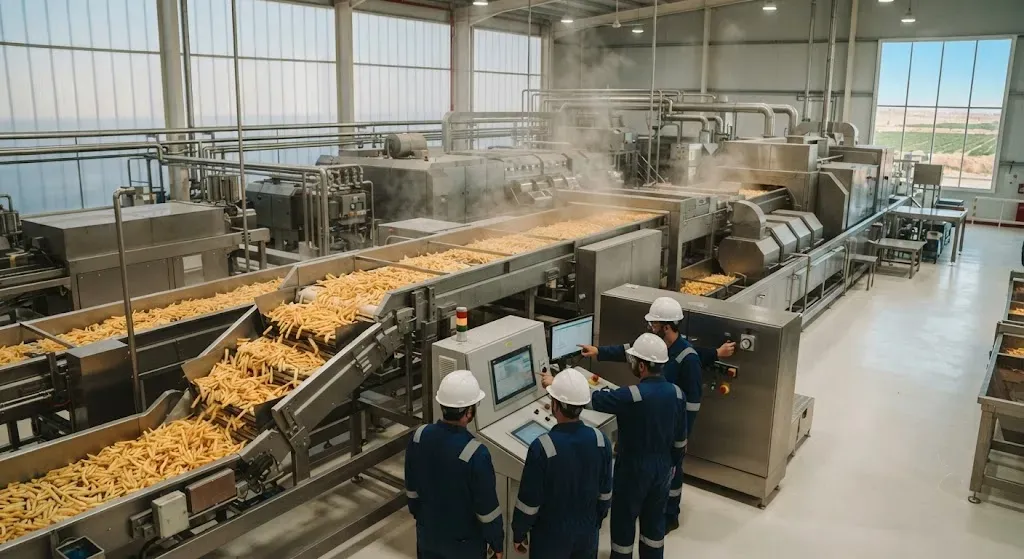
SAUDI ARABIA —Al-Jouf Agricultural Development Co. has officially advanced its operational capabilities by completing construction on its major factory expansion initiative and initiating trial production runs. Headquartered in Saudi Arabia, Al-Jouf Agricultural Development Co. operates as a leading agricultural and food processing enterprise specializing in sustainable crop cultivation, agricultural manufacturing, and regional food supply chain distribution. The multi-phase undertaking was originally greenlit to expand existing manufacturing footprints and elevate output levels across core product lines by half over prior baselines. Transitioning the facility into the testing phase represents a critical operational milestone following months of infrastructure development and machinery integration.
This operational transition holds substantial significance for regional agricultural manufacturing and supply chain efficiency, addressing growing consumer and commercial demand for locally processed food products. Enhancing domestic production capacity mitigates reliance on external imports, thereby strengthening regional food security frameworks and supply chain resilience within the domestic market. For industrial stakeholders, large-scale plant enhancements demonstrate the viability of capital investments directed toward scaling domestic agro-industrial capabilities. These developments provide broader economic benefits by fostering localized technological adoption and operational modernization within the sector.
The successful scaling of production infrastructure underscores a broader trend toward industrial self-sufficiency and economic diversification across regional markets. Agricultural processing entities are increasingly investing in capacity upgrades to capture shifting consumption patterns and align with national economic enhancement agendas. Such expansions stimulate related sectors, including packaging, logistics, and raw agricultural commodity farming, creating a cascading positive impact across the industrial value chain. Policy frameworks supporting domestic manufacturing continue to encourage firms to fast-track capital projects aimed at optimizing operational scale and export readiness.
For market participants and institutional investors, the progression toward commercial readiness signals potential revenue growth and improved asset utilization for the enterprise. Successfully executing complex capital projects without reported cost escalations enhances management credibility and demonstrates robust operational execution capabilities. Observers and investors will monitor the trial phase outcomes to gauge commercial viability and the subsequent timeline for full-scale commercial production ramp-up. Such operational benchmarks serve as key performance indicators for evaluating the financial health and market positioning of publicly traded agricultural producers.