UNITED STATES OF AMERICA —Auburn University will receive USD 1.26 million through three research grants awarded under Alabama's Research and Development Enhancement Fund, as part of a wider USD 8.10 million allocation supporting 20 research and development initiatives across the state. Administered by the Alabama Department of Economic and Community Affairs (ADECA), the programme supports applied research intended to strengthen industrial capabilities, develop new technologies and expand economic opportunities.
The largest allocation of USD 600K will finance the development of an artificial intelligence platform designed to assist in identifying post-traumatic stress disorder (PTSD) risks. The proposed technology will target applications involving law enforcement personnel, emergency responders and military veterans. A separate USD 277,240 grant will support research into improving the accessibility and usability of AI technologies for individuals and organisations without requiring specialised technical expertise.
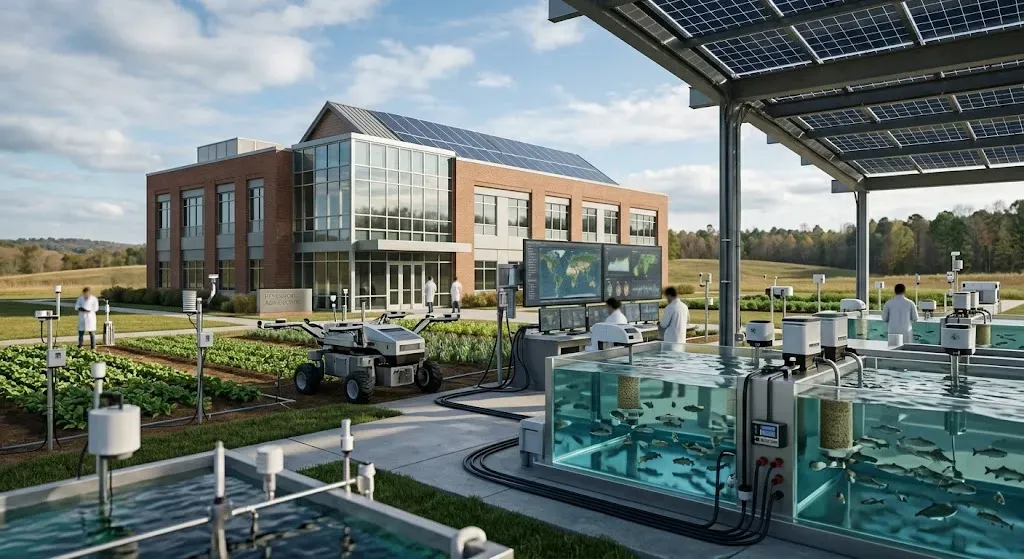
The third initiative, receiving USD 387,658, will investigate the conversion of aquaculture wastewater and emissions from paper manufacturing facilities into protein-rich fish feed using microalgae. The research will examine opportunities to recover useful biological resources from industrial and agricultural waste streams while developing alternative inputs for fish farming.
The combined research programme has implications across several sectors of Alabama's economy. In technology and public safety, the AI initiatives could contribute to more accessible digital tools and improved approaches to identifying mental health risks among occupational groups exposed to traumatic incidents. Their eventual commercial and operational applications will depend on research outcomes, validation and implementation requirements.
For the aquaculture and agricultural industries, the microalgae project addresses two interconnected challenges: wastewater and industrial emissions management, and the cost of protein inputs used in fish production. If technically and economically viable, the process could create additional value from waste materials, reduce dependence on conventional feed ingredients and establish opportunities for collaboration between paper manufacturers and aquaculture operators.
All three Auburn projects are scheduled to run for two years. Auburn University is a public research institution in Alabama, United States, with academic and research activities spanning engineering, technology, agriculture and applied sciences. ADECA is the state government agency responsible for administering the research funding programme, which was established under Alabama's 2019 Innovation Act to encourage research and development and support economic activity.
For businesses and potential industry partners, the grants provide an early indication of state-backed research priorities in applied AI, sustainable food production and industrial resource recovery. The projects may create opportunities for technology transfer, commercial partnerships and further investment if the research progresses towards practical deployment.