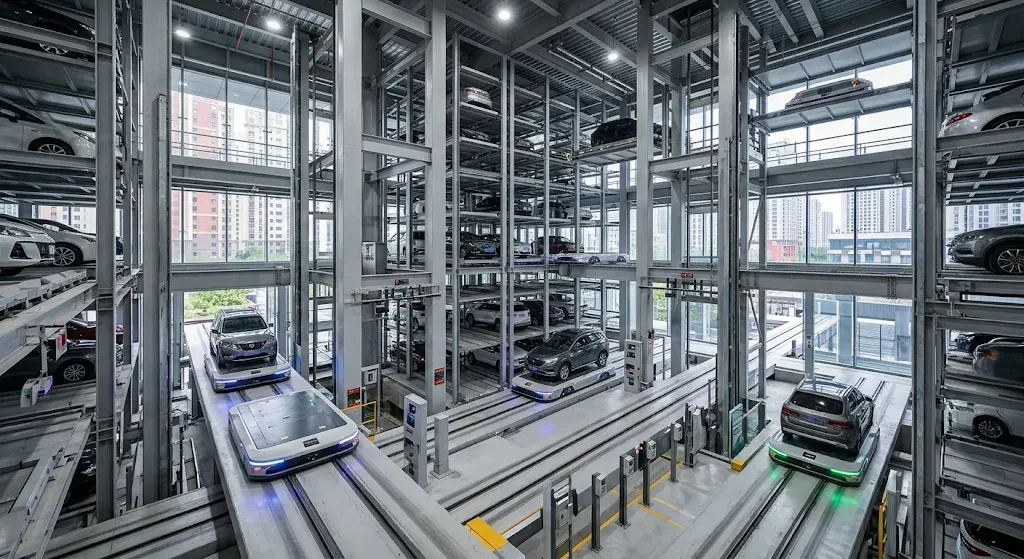
INDIA —Affordable Robotic & Automation Limited (ARAPL) has finalized its largest single commercial order valued at approximately INR 190 million, focusing on next-generation automated guided vehicle parking technology. The agreement centers on deploying autonomous mobile robotic systems designed to handle vehicle transport and positioning within parking structures without reliance on conventional multi-level mechanical setups. Established in 2005 and headquartered in Pune, Affordable Robotic & Automation Limited (ARAPL) provides turnkey industrial automation, warehouse robotics, and specialized engineering solutions across domestic and international markets.
This development signifies a structural shift away from traditional mechanical parking architectures that depend heavily on complex chains, bearings, pallets, and multiple electric motors. By utilizing intelligent, battery-operated mobile robots capable of fleet-level redundancy, the deployment addresses critical engineering vulnerabilities associated with traditional multi-level parking infrastructure. The system is engineered to mitigate single points of failure by allowing alternative units to maintain operational continuity if an individual robot experiences downtime.
The transition toward autonomous mobile robotics directly impacts real estate developers, urban infrastructure planners, and commercial property managers seeking to optimize space utilization. Traditional parking designs frequently impose heavy structural and maintenance burdens on developers. Implementing autonomous guided vehicle architectures addresses these challenges by reducing post-installation maintenance expenses and enhancing density potential for urban commercial complexes and multi-level parking facilities.
From an investment and strategic perspective, this contract signals accelerated commercialization of advanced robotic solutions in high-density real estate and transit infrastructure. Market participants are increasingly adopting modular infrastructure frameworks that lower long-term lifecycle costs and offer flexible deployment models. For institutional investors and corporate developers, the integration of fleet-managed robotics establishes a scalable benchmark for future urban infrastructure projects.