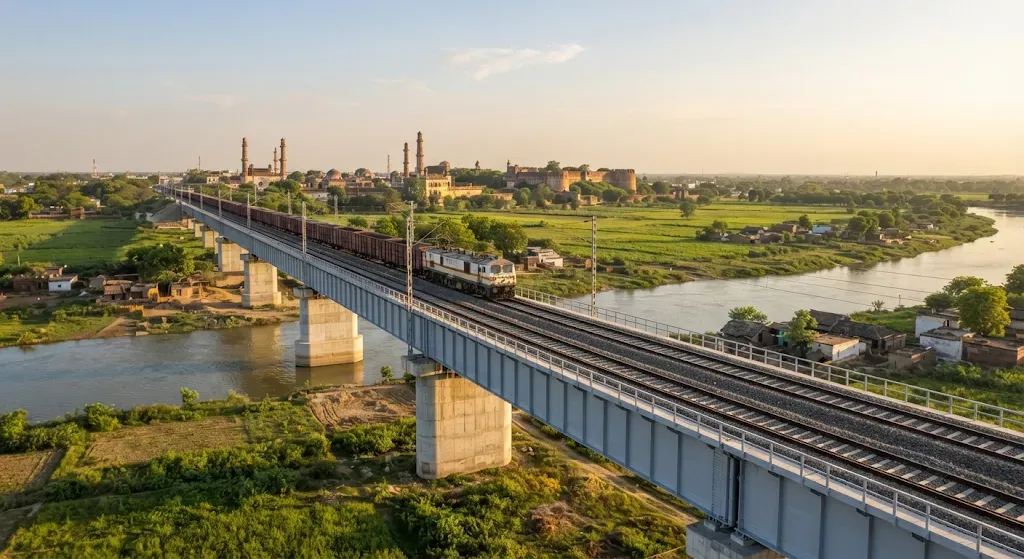
INDIA —Northern Railway has awarded a major engineering contract valued at INR 13.11 billion to ARSS Infrastructure Projects for the design and construction of an important bridge along a busy regional corridor. The undertaking involves building a new bridge featuring a 14-span composite girder structure designed to accommodate two parallel tracks next to an existing rail bridge. This construction sits at chainage 2820 meters in the Jaunpur-Zafrabad section within the Lucknow Division of Uttar Pradesh. The scope of work encompasses comprehensive protection measures, the dismantling of the existing infrastructure, and associated structural modifications stipulated in the tender documents.
ARSS Infrastructure Projects Limited is an engineering, procurement, and construction company based in India that specializes in infrastructure development, including railways, highways, and bridges. This multi-year railway intervention carries strategic economic importance for regional transit efficiency by alleviating persistent bottlenecks on high-density routes. Expanding rail capacity through track doubling directly addresses freight and passenger congestion, facilitating smoother logistical flows across northern industrial corridors. For engineering enterprises and industrial stakeholders, such high-value public sector awards signal continued momentum in state-backed infrastructural expenditures aimed at modernizing core transport networks.
The realization of this railway project holds significant operational implications for regional connectivity and heavy transport logistics. By enhancing track capacity in the Jaunpur-Zafrabad corridor, the initiative supports long-term improvements in train turnaround times and freight throughput for commercial operators reliant on public rail systems. Market participants and investors monitor such contract deployments closely as indicators of steady capital allocation toward domestic infrastructure. The awarded undertaking underscores the ongoing emphasis on executing complex engineering assignments within rigid statutory timelines, reinforcing structural growth prospects across the domestic civil construction and railway engineering sectors.