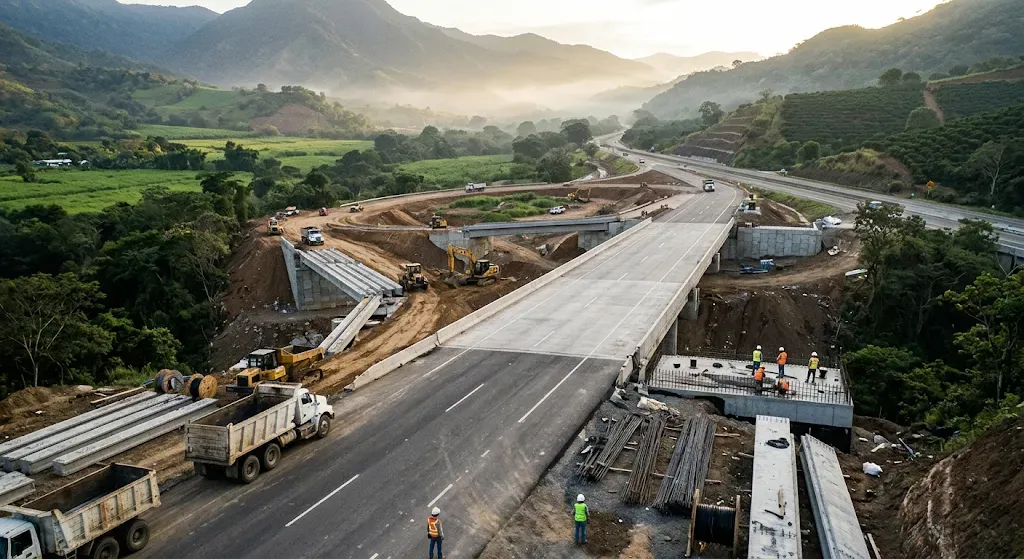
INDIA —Ashoka Buildcon has formalized an agreement with the National Highways Authority of India (NHAI) for infrastructure development works. The assignment involves executing balance construction operations for a specific multi-lane access-controlled expressway corridor located in Gujarat under an engineering, procurement, and construction framework. The contracted financial consideration stands at INR 8.66 billion.
Established in 1993, Ashoka Buildcon is a prominent Indian infrastructure development and construction enterprise specializing in highways, bridges, and power sector projects. The National Highways Authority of India (NHAI) functions as the apex government body responsible for the development, maintenance, and management of national highway networks across the country. Large-scale public sector procurement initiatives of this nature serve to address critical bottlenecks in national transportation networks, reduce transit times, and enhance freight logistics efficiency across industrial corridors.
This development carries significant implications for the domestic engineering and construction sector, particularly firms specializing in heavy civil infrastructure and highway development. Stakeholders in the transportation and logistics sectors benefit from accelerated completion of high-density economic corridors, which ultimately lower vehicular operating costs and streamline supply chains. Furthermore, the award highlights ongoing government expenditure on public infrastructure as a primary driver of economic activity within the regional construction market.
For corporate investors and market participants, securing high-value public contracts reinforces revenue visibility and order book robustness for mid-to-large-cap infrastructure entities. The mandated completion timeline requires disciplined project management and efficient resource allocation to mitigate execution risks over the implementation period. Compliance with regulatory disclosure norms and strict adherence to quality parameters during the subsequent defect liability phase remain critical operational priorities for participating contractors.