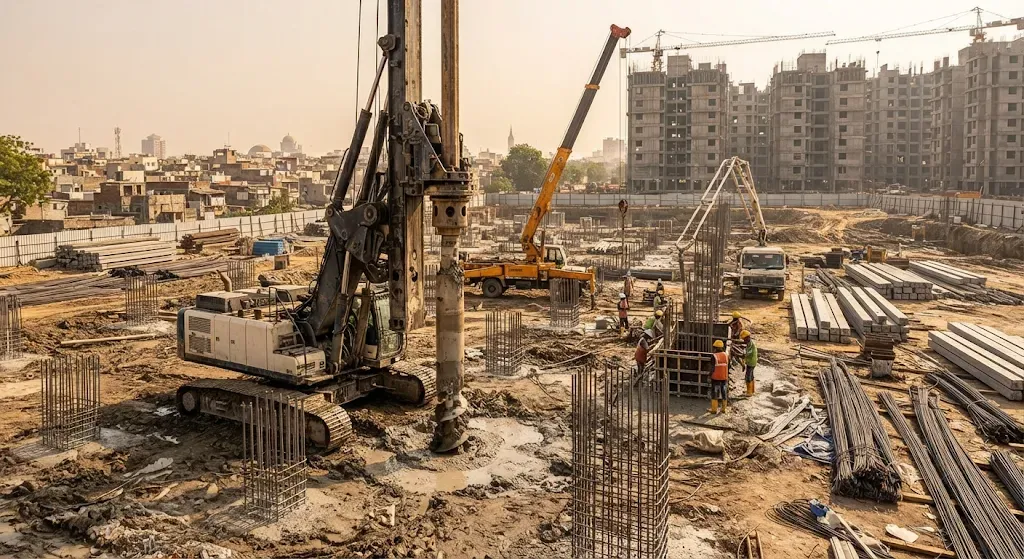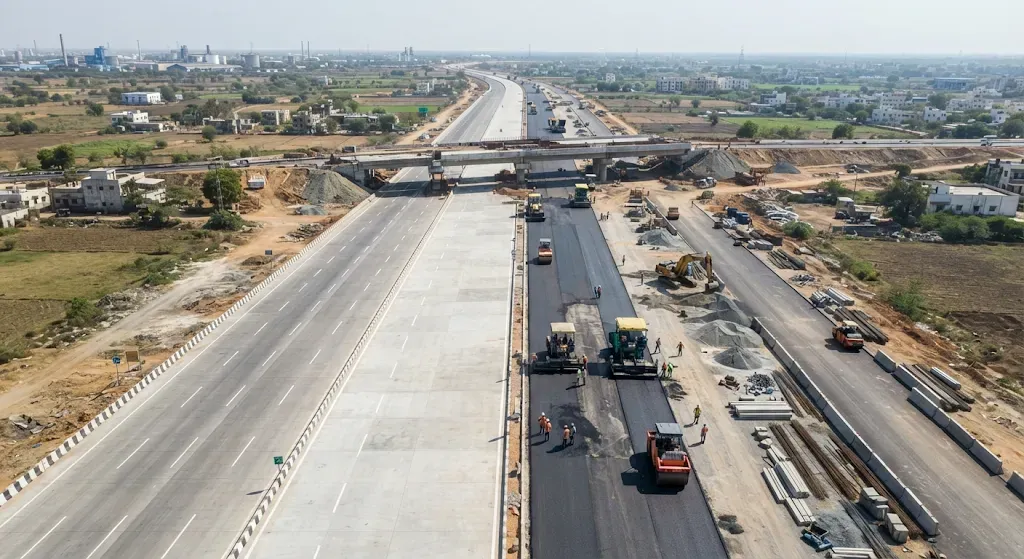
INDIA —Ashoka Buildcon has received a Letter of Acceptance from the National Highways Authority of India (NHAI) for balance construction works on Package VIII of the Vadodara-Mumbai Expressway in Gujarat, covering the Jujuwa to Gandeva stretch between Km 154.6 and Km 190. Executed under the Engineering, Procurement, and Construction model, the contract carries an accepted value of Rs 14.65 billion excluding Goods and Services Tax, with a stipulated execution timeline of eighteen months and a ten-year defect liability period.
Ashoka Buildcon is an Indian infrastructure developer operating across engineering, procurement, and construction as well as build-operate-transfer highway assets. The National Highways Authority of India (NHAI) is the statutory agency responsible for developing, maintaining, and managing national highway corridors across India.
Securing this stretch adds visibility to Ashoka Buildcon's near-term order book in a core domestic segment where execution speed and balance-sheet discipline heavily influence earnings conversion. For highway contractors, an eighteen-month build window paired with a ten-year defect liability obligation places heightened emphasis on quality control, materials sourcing, and long-term pavement durability rather than short-term turnover alone.
The mandate touches road construction, heavy civil engineering, bulk construction materials, and freight logistics along Gujarat's western corridor. Advancing remaining works on an eight-lane access-controlled expressway supports corridor continuity between major economic centers in Gujarat and Maharashtra, while reflecting ongoing central government push to complete high-capacity arterial highways.
For institutional investors and industry participants, the award highlights selective contract wins in EPC highway packages where technical capability and project management determine margins. Contractors able to deliver within tight schedules while containing input cost volatility and meeting multi-year maintenance standards stand to benefit most as public highway spending shifts toward corridor completion and asset reliability.