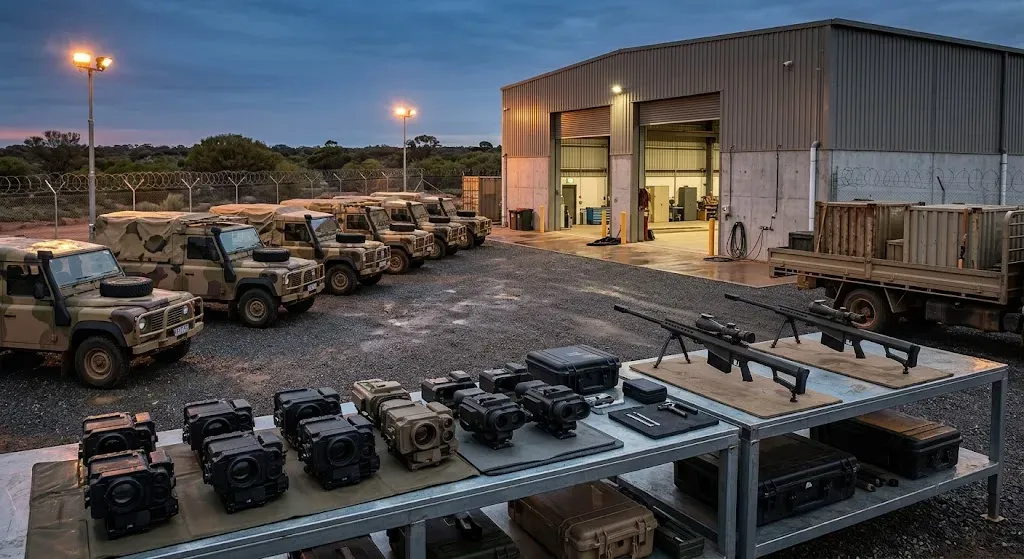
AUSTRALIA —Australia has taken a significant step toward updating its defense capabilities by integrating advanced mid-wave infrared targeting technology across its ground forces. Defense technology provider Leonardo DRS has concluded equipment deliveries and tactical training for its Improved Night/Day Observation Device (INOD) Block III thermal weapon sights destined for Australian Army snipers. The procurement was executed under the broader LAND 159 Tranche 1 lethal capability program, with Australian defense contractor NIOA serving as the prime partner managing local logistics and program coordination.
Leonardo DRS is a U.S.-based defense technology supplier focused on advanced sensing, network computing, force protection, and electric propulsion systems for military applications worldwide. NIOA operates as Australia's largest prime contractor specializing in small arms, munitions, and weapons systems integration for defense and law enforcement customers.
The deployment delivers an immediate operational enhancement for specialized military units operating in complex environment settings. Equipped with micro-cooled focal plane arrays, clip-on thermal sights allow marksmen to identify targets through darkness, heavy smoke, atmospheric haze, and harsh weather conditions without losing their primary scope settings. By adopting the same optic architecture utilized by U.S. Special Operations Forces, the Australian Defence Force enhances operational compatibility, shared supply chain resilience, and tactical alignment with its key international security ally.
This delivery underscores growing defense capital allocation toward electro-optical and infrared surveillance hardware across Allied nations. As modern battlefields demand high-precision capability in degraded visual environments, allied defense procurement strategies are increasingly prioritizing modular, drop-in optics over complete firearm re-configurations. For defense prime contractors and equipment suppliers, the completion of this program demonstrates the commercial viability of international co-development models, opening further opportunities for global military supply chains and cross-border technology transfers.