
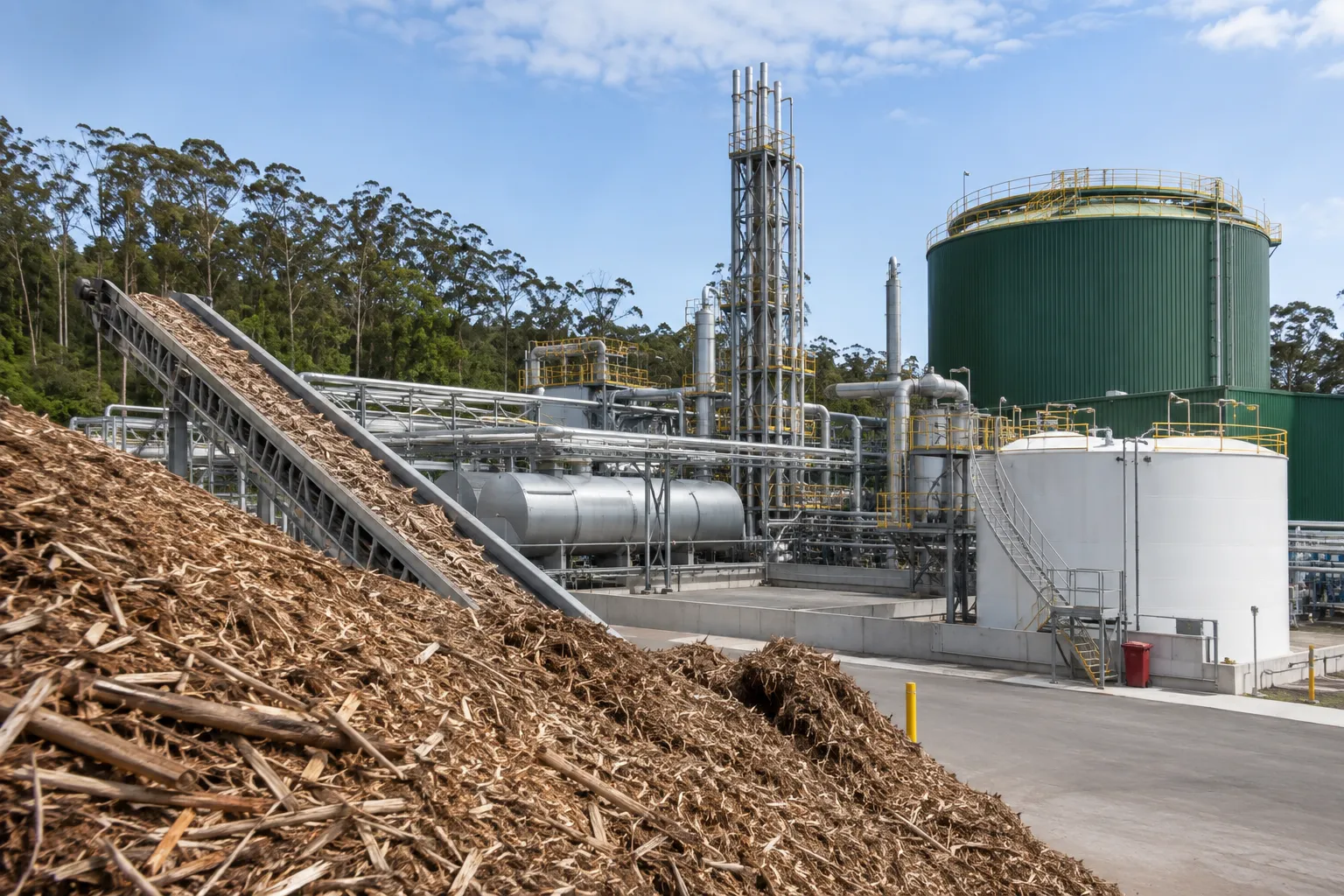
The Australian Renewable Energy Agency has committed up to $32 million to HAMR Energy to develop a domestic sustainable aviation fuel supply chain. This initiative leverages plantation forestry residues to produce low-carbon methanol and sustainable aviation fuel, enhancing national fuel security and decarbonizing the aviation sector.
According to official disclosures, the Australian Renewable Energy Agency (ARENA) has approved up to $32 million in conditional funding for HAMR Energy to advance a domestic sustainable aviation fuel (SAF) supply chain. HAMR Energy is a low-carbon liquid fuels developer focused on commercializing SAF and renewable diesel production in Australia, while ARENA is a federal government agency tasked with accelerating renewable energy innovation through strategic grant funding. The capital allocation is structured in two phases, with an initial $12.5 million designated for Front-End Engineering Design, followed by a conditional $19.5 million tranche contingent upon the company securing requisite project co-funding.
This development is strategically significant as it addresses critical vulnerabilities in national fuel security while targeting emissions reductions in hard-to-abate transport sectors. By establishing an integrated domestic production pathway, the initiative aims to reduce Australia's historical reliance on imported liquid fuels. The proposed infrastructure, anchored by a methanol-to-jet SAF refinery in Port Adelaide, is designed to process approximately 600,000 tonnes of plantation forestry residues annually, yielding an estimated 140 million litres of SAF and abating roughly 390,000 tonnes of carbon dioxide equivalent per year.
From a policy and industry perspective, this allocation represents the inaugural investment under the federal government's $250 million Low Carbon Liquid Fuels priority, administered via the Future Made in Australia Innovation Fund. The operational footprint spans South Australia and Victoria, directly engaging the regional plantation forestry sector in the Green Triangle. This cross-sector integration is projected to generate hundreds of construction positions and over 200 permanent roles, stimulating ancillary demand across engineering, manufacturing, and regional logistics networks.
For investors and industrial stakeholders, this funding milestone signals a maturing market for biofuel infrastructure in the Asia-Pacific region. Engineering, procurement, and construction firms specializing in renewable energy facilities and methanol conversion technologies are positioned to benefit from the upcoming detailed design and procurement phases. Furthermore, the successful execution of this supply chain model could establish a scalable blueprint for future waste-to-fuel projects, attracting further institutional capital into the domestic low-carbon liquid fuels sector.
About GlobeNewsInfo
GlobeNewsInfo.com is a business news platform providing latest updates on global business developments, projects, and contract opportunities across diverse sectors and regions. The platform is designed to serve as a trusted source of information for companies, investors, and professionals worldwide.