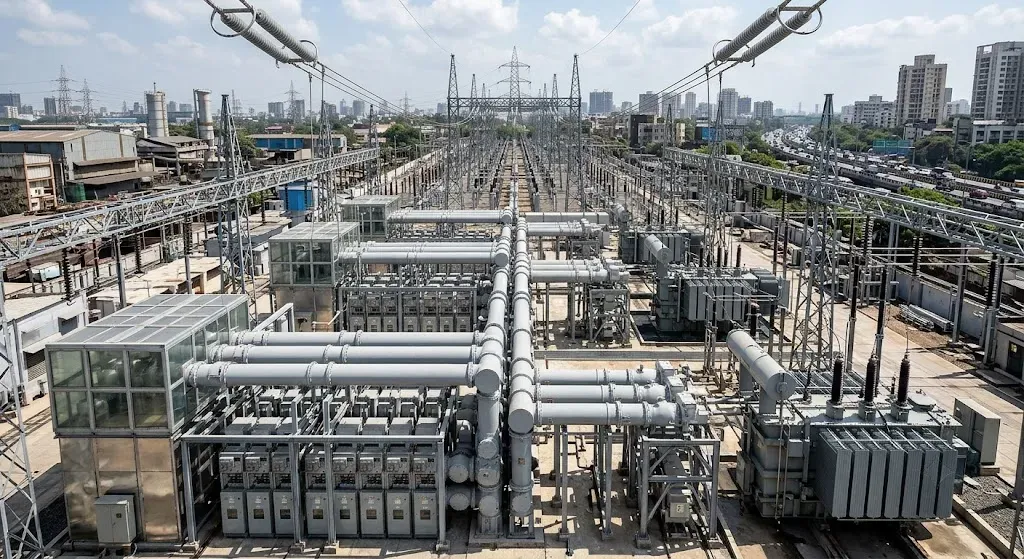
INDIA —Bajel Projects has been awarded a major engineering, procurement, and construction agreement by The Tata Power Company to execute high-voltage electrical infrastructure works in Mumbai. Valued in excess of INR 2 billion according to internal classification thresholds, the project encompasses the establishment of 400 kV gas-insulated substations alongside associated civil engineering works at Dharavi and Ghatkopar. The contractual scope mandates complete execution within an eighteen-month timeframe, covering electrical systems, substation automation, communication architecture, and balance of plant equipment. Bajel Projects Limited operates as an engineering, procurement, and construction specialist focusing on power transmission and distribution sectors as part of the Bajaj Group. The Tata Power Company operates as a major Indian integrated utility managing power generation, transmission, and distribution operations.
This capital expenditure is critical for addressing escalating electricity demand driven by accelerated urbanization in metropolitan environments. Traditional open-air electrical yards require expansive footprints, making them inefficient for space-constrained urban sectors. By deploying compact gas-insulated technology, utility operators can bypass spatial constraints while minimizing transmission losses and insulating critical electrical hardware from environmental pollutants. Strengthening receiving stations at strategic nodes prevents localized grid congestion and protects commercial and residential consumers from sudden voltage fluctuations or outages during peak demand cycles.
The contract carries substantial implications for the power and utilities sector, particularly regarding urban grid modernization initiatives. State and private distribution licensees are increasingly prioritizing high-capacity subterranean and indoor GIS configurations to upgrade aging grids. Engineering contractors possessing specialized technical competencies in high-voltage alternating current systems stand to benefit from robust deal flows as municipal authorities enforce stricter grid resilience mandates. Furthermore, the reliance on domestic engineering firms highlights a preference for localized project execution capabilities, shielding infrastructure rollouts from international supply chain bottlenecks.
For market participants and institutional investors, the order intake reinforces order book visibility and revenue predictability for specialized infrastructure contractors. Sustained capital deployment toward transmission network expansions ensures consistent financial performance for engineering firms aligned with utility modernization programs. Stakeholders monitor such high-value project wins as indicators of broader capital expenditure trends within the power transmission sector, reflecting steady corporate investment in core municipal assets.