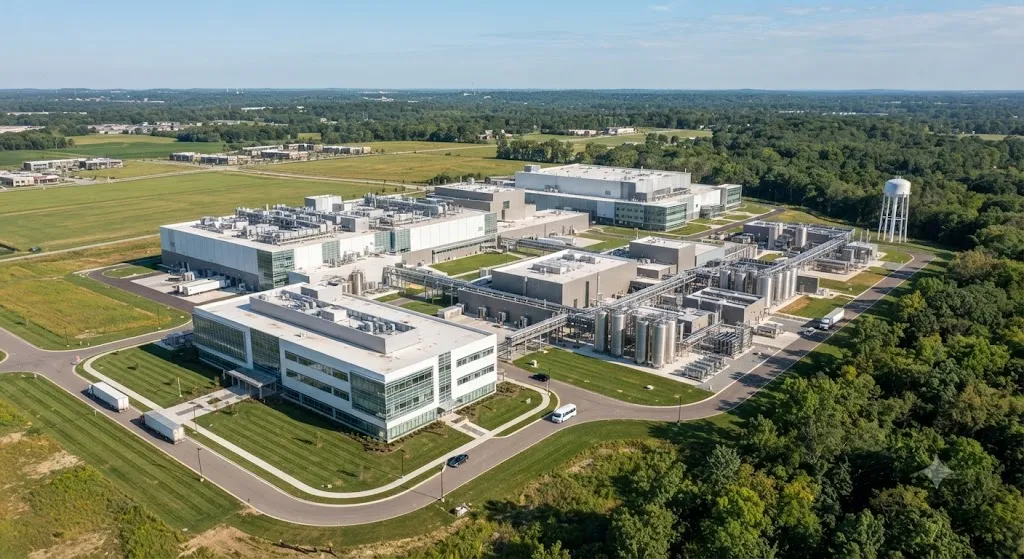
UNITED STATES OF AMERICA —A major expansion in domestic pharmaceutical manufacturing is underway as a capital expenditure of USD 2.2 billion has been allocated to build a modular biopharmaceutical facility in New Albany, Ohio. Designed to house both active pharmaceutical ingredient synthesis and final drug formulation capabilities, the new campus will feature digitalized and automated production technologies. The first phase focused on active substance production is scheduled to begin operations in 2031, followed by a secondary drug product manufacturing module in 2034. The initiative is projected to generate roughly 600 permanent high-value technical jobs alongside 1,500 temporary construction positions.
This multi-billion-dollar allocation represents a strategic move to fortify onshore manufacturing capabilities and insulate supply networks against global logistical disruptions. Bayer AG is a global enterprise operating in the healthcare and nutrition sectors, with core competencies in pharmaceuticals, consumer health, and crop science. By placing advanced capacity directly within North America, its primary pharmaceutical revenue driver, the company enhances operational reliability and accelerates market delivery for specialized therapies targeting cardiovascular conditions, renal diseases, and oncology.
The deployment underscores a broader trend among major healthcare multinationals to localize production infrastructure within key domestic markets. For the host region, the investment strengthens Ohio's growing life sciences cluster, facilitating potential academic and commercial research collaborations. The construction phase will provide localized economic momentum, while long-term operations will draw specialized workforce talent to the local industrial ecosystem.
From an enterprise perspective, the long-term capital allocation shifts operational reliance toward automated, high-efficiency manufacturing facilities capable of scaling to meet shifting clinical demand. For commercial healthcare markets and institutional stakeholders, the added capacity secures long-term inventory availability for critical treatments while positioning the host market as a central operational hub for next-generation drug delivery.