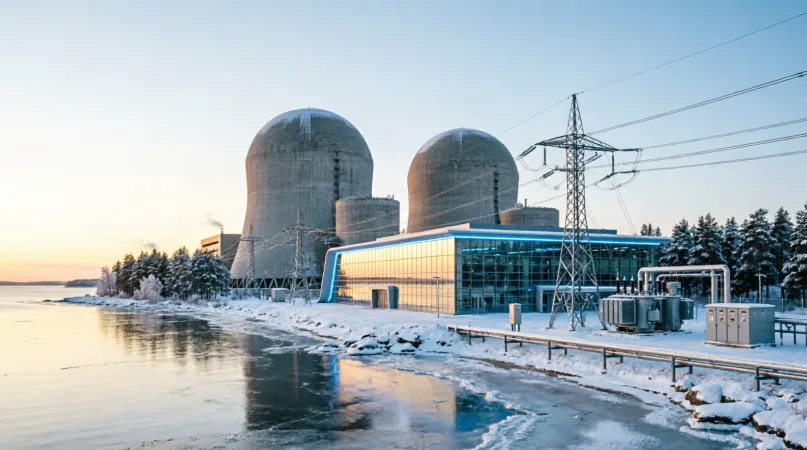
FINLAND —Nordic power generation is seeing a major shift toward long-term corporate off-take agreements as hyperscale technology providers race to secure uninterrupted, zero-emission electricity. In a landmark strategic move, a 22-year power purchase agreement has been structured to channel up to half of the generation capacity from the Loviisa nuclear facility directly into corporate power infrastructure through 2050. The arrangement incorporates plans to expand the plant's output by 10 megawatts, building upon an existing 38-megawatt capacity upgrade slated for completion in 2028.
This multi-decade commitment provides the essential capital visibility required to execute a €1 billion life-extension program for the twin-reactor installation, which currently accounts for roughly one-tenth of Finland’s total electricity supply. Beyond basic off-take terms, the collaboration extends to optimizing a new 94-megawatt energy storage project and exploring prospective developments across renewable generation, power flexibility, and next-generation reactor technologies.
The agreement underscores the critical role that firm, baseload clean energy plays in sustaining large-scale digital infrastructure without undermining regional grid stability. As hyperscale computing and artificial intelligence workloads expand rapidly across Northern Europe, technology firms are increasingly forced to directly underwrite the long-term operational viability of regional nuclear and renewable assets to mitigate severe grid bottlenecks and market price volatility.
For energy utilities and institutional investors, long-term power purchase agreements tied to nuclear life-extensions represent an evolving asset-management model that significantly improves risk-adjusted returns and operational cash-flow predictability. By locking in contracted demand from creditworthy corporate off-takers, energy operators can hedge against wholesale spot market fluctuations while successfully financing complex, capital-intensive infrastructure overhauls.
Fortum is a Nordic energy company specializing in low-carbon power generation, district heating, and flexible energy solutions across the Nordic region. Google is a global technology enterprise operating large-scale cloud computing infrastructure, internet services, and global data center networks.