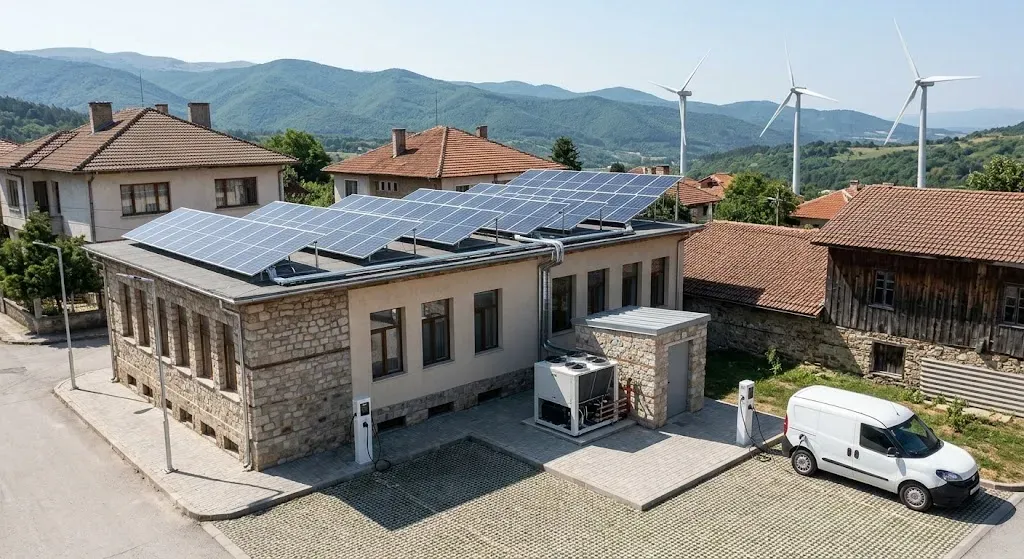
BULGARIA —The specialized financial mechanism FLAG - Financial instrument for clean energy transition (FLAG FICET), deployed in Bulgaria, has unlocked significant capital for regional clean energy infrastructure, addressing persistent funding and capacity bottlenecks faced by local administrations. Operating through an integrated framework combining technical assistance, investment loans and non-repayable grants, the initiative has supported dozens of municipal modernization projects across the country. Fund Flag is an institutional entity established by the Bulgarian government to coordinate specialized financing and support regional development initiatives.
The operational model addresses a critical market failure where municipal entities possess sustainability ambitions but lack internal technical capacity and ready access to bankable project pipelines. By blending public support with dedicated loan structures, the framework has facilitated substantial capital deployment into local infrastructure. Participating municipalities have directed these funds toward diverse interventions, including large-scale building retrofits for public healthcare facilities, commercial-scale solar generation installations, and comprehensive electrification upgrades for municipal transit networks. Additional engineering applications encompass geothermal heating infrastructure designed to harness high-temperature subterranean resources for district heat supply.
For regional stakeholders, institutional lenders, and project developers, this funding model establishes a reproducible template for overcoming early-stage project barriers in emerging markets. The structural integration of technical advisory services alongside debt and grant capital significantly de-risks municipal portfolios, creating attractive entry points for private co-investors. Consequently, regional authorities can accelerate compliance with broader continental energy mandates without relying entirely on constrained municipal budgets.
Market participants and industrial developers specializing in renewable energy generation, energy-efficient building materials, and electrical mobility systems gain predictable pipelines of publicly backed commercial opportunities. The measurable reductions in carbon output and primary energy consumption validate the economic viability of decentralized green investments, signaling to commercial lenders that municipal climate assets possess reliable risk-adjusted return profiles.