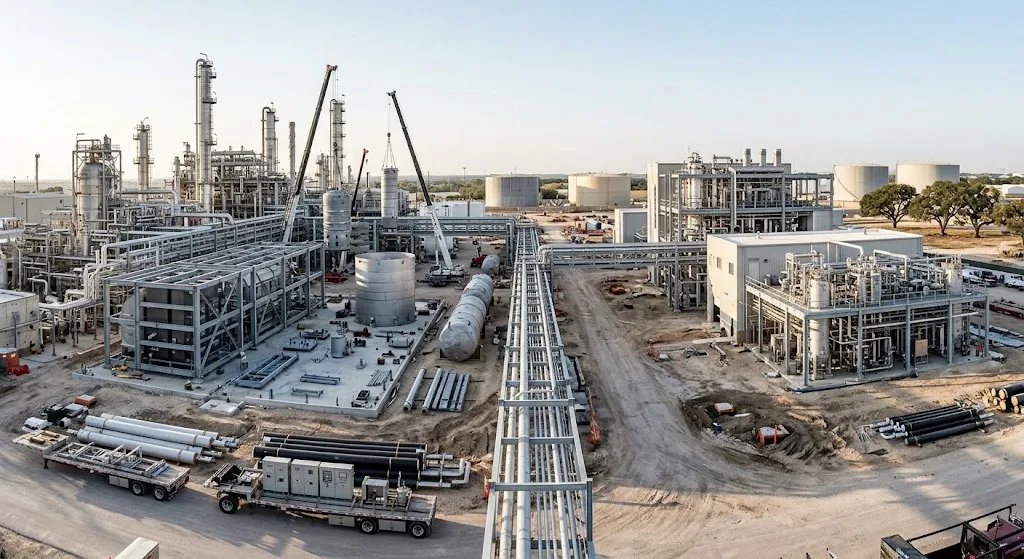
UNITED STATES OF AMERICA —A federal grant modification will shift $50 million in U.S. Department of Energy funding toward two existing industrial facilities in North America, anchoring a $125 million capital deployment strategy aimed at domestic battery materials production. Cabot Corporation is pivoting away from a previously planned facility in Michigan to expand brownfield sites in Franklin, Louisiana, and Pampa, Texas. Supported by $75 million in corporate capital alongside the modified award, the expansion targets commercial operational status by the end of 2028.
Cabot Corporation is a Boston-headquartered specialty chemicals and performance materials manufacturer operating globally. The company produces reinforcing carbons, specialty carbons, carbon nanotubes, battery materials, and engineered compounds for industrial applications. It serves major automotive, electronics, and industrial manufacturers across North America, Europe and Asia.
The strategic reallocation accelerates domestic production capacity for specialty conductive additives, including advanced conductive carbons and carbon nanostructures. These materials serve as essential components in energy storage systems, electric vehicle platforms, and high-density power infrastructure required for artificial intelligence data centers and grid modernization projects. Expanding domestic supply directly addresses supply chain vulnerabilities in critical mineral processing and advanced chemical manufacturing.
By utilizing established manufacturing infrastructure rather than constructing a greenfield site, the project reduces capital expenditure risks and shortens the timeline required to deliver localized supply to North American battery cell producers. The facilities will support commercial-scale manufacturing of specialized product lines designed to improve battery performance, charge acceptance, and structural longevity. The investment signals growing demand for specialized domestic chemical inputs as energy storage deployment accelerates alongside industrial electrification trends.