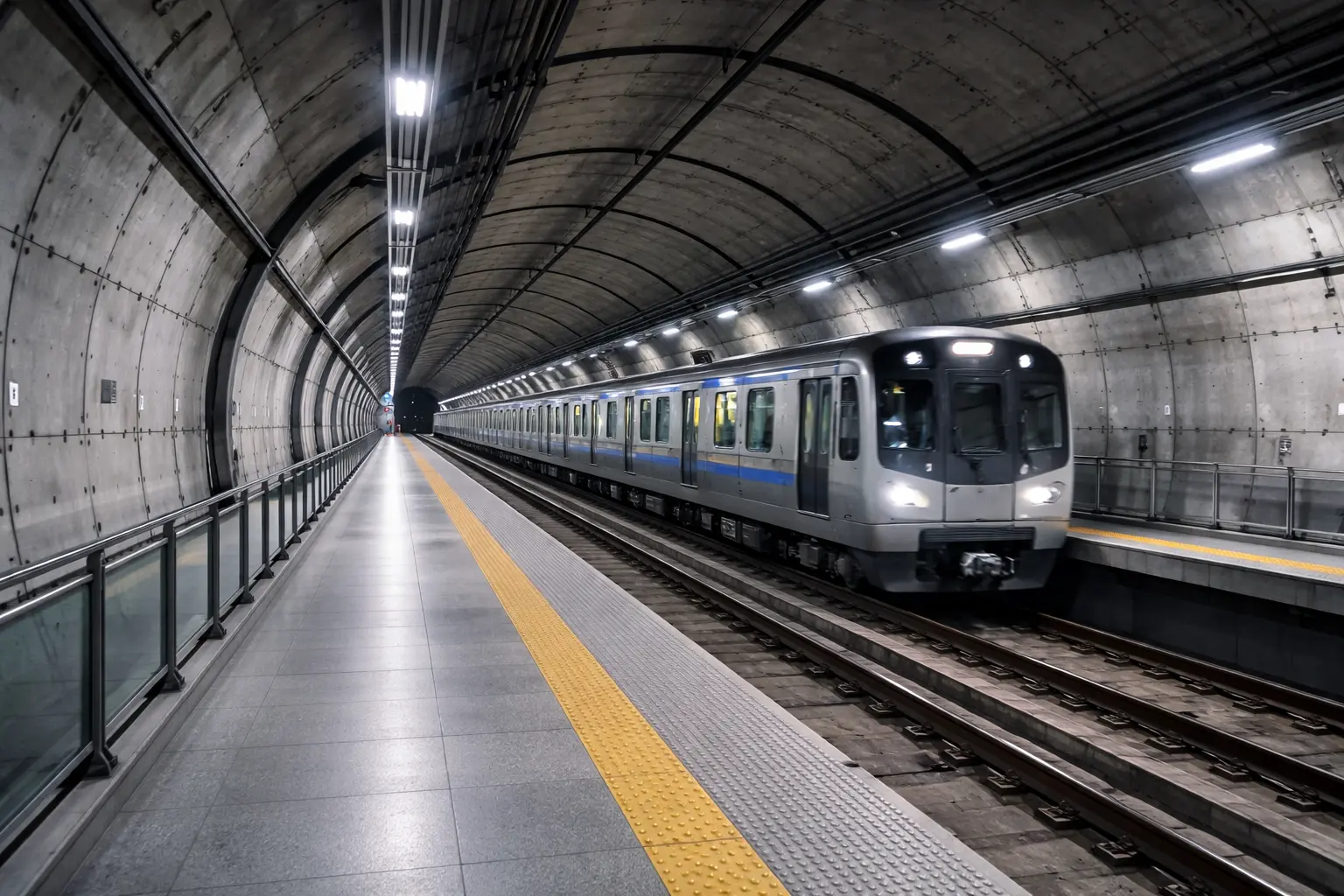
SPAIN —The municipal administration of Rivas has initiated civil engineering works along Metro Line 9B to resolve territorial division caused by the existing surface-level track alignment. The project involves covering a 2.5-kilometer section of the railway to construct an integrated green corridor featuring public spaces and pedestrian connections between the Cerro del Telégrafo sports complex and the Rivas Futura sector. Funding for the infrastructure initiative is secured through a EUR 40 million direct loan agreement executed between the Rivas City Council and the Council of Europe Development Bank (CEB). The Council of Europe Development Bank (CEB) is a multilateral financial institution with a social mandate focused on supporting sustainable development, social cohesion, and infrastructure investments across its member states. The Rivas City Council is the local government authority governing the municipality of Rivas Vaciamadrid within the Community of Madrid, responsible for municipal administration, urban planning, and local public services.
This financial commitment marks a notable milestone as the first direct borrowing operation established between a multilateral lending institution and the municipal government of Rivas. The arrangement aligns with strategic local governance targets outlined within the municipal planning framework, designated to optimize land use efficiency, enhance public mobility networks, and decrease localized environmental impacts. By utilizing municipal resources alongside specialized development financing, the local administration seeks to bridge industrial and residential zones that have historically remained physically isolated. The engineering plans require the structural covering of the track segments, which necessitates rigorous inter-agency coordination regarding construction schedules and regulatory compliance with regional authorities in Madrid.
The development holds significant relevance for regional urban planning stakeholders, municipal authorities, and civil engineering contractors operating within the Iberian market. For municipal decision-makers across European metropolitan areas, the transaction illustrates alternative capital-raising mechanisms for public infrastructure projects without over-relying on traditional sovereign debt channels. Civil engineering firms and urban design consultancies observe this undertaking as a benchmark for retrofitting transit infrastructure to improve urban connectivity and expand green spaces in densely developed zones. Furthermore, financial institutions specializing in multilateral lending and social infrastructure funding gain actionable insights into direct sub-sovereign financing structures for municipal revitalization initiatives.
The execution of this capital expenditure program reinforces broader policy commitments toward sustainable urban development and climate-resilient municipal design. Regional development policies increasingly prioritize infrastructure investments that mitigate urban sprawl, promote non-motorized transit modalities, and foster social inclusion by bridging physical divides within communities. For regional economies, such municipal investments generate steady demand for specialized construction services, architectural design, and environmental engineering expertise, influencing long-term procurement trends in the public sector.