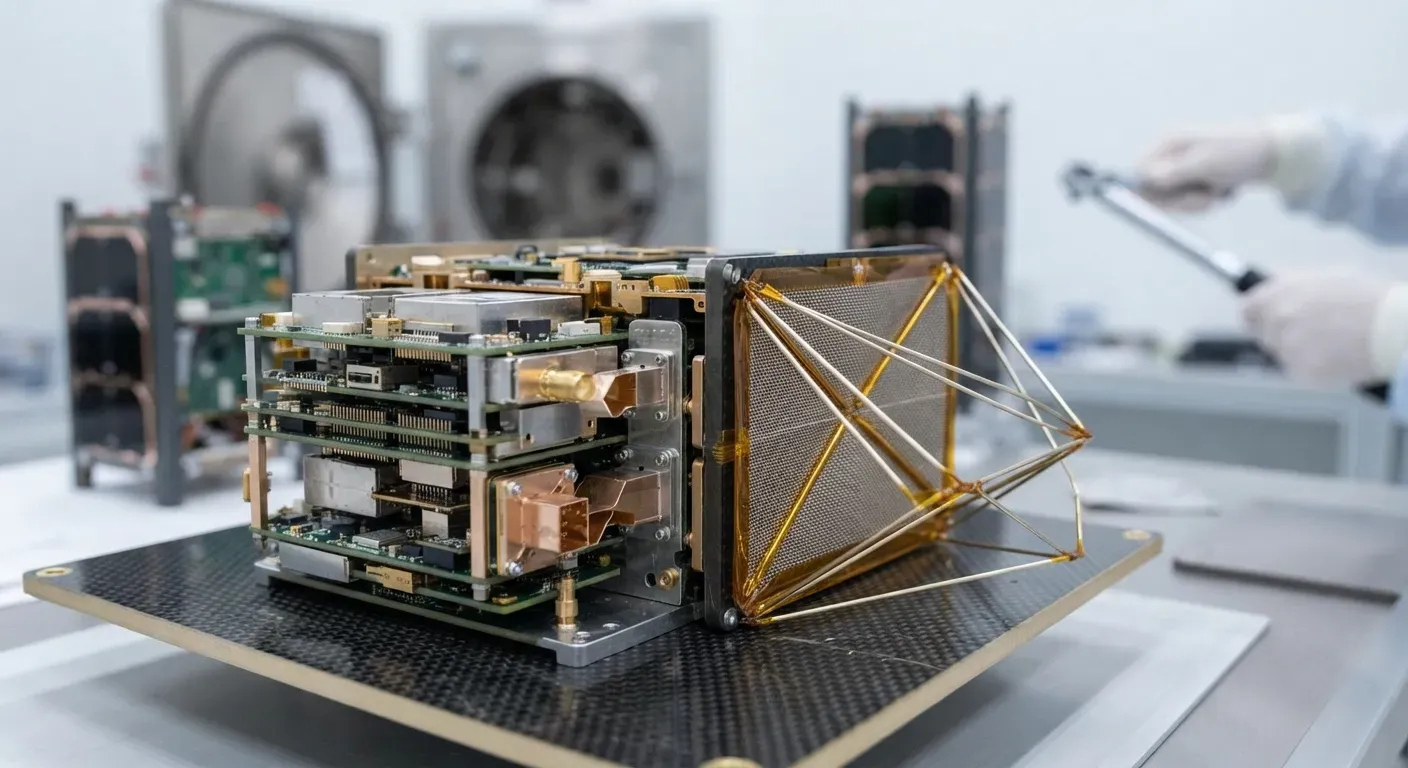
INDIA —Bengaluru-based space and electronics firms Centum Electronics and SpacePixxel Technologies have signed a memorandum of understanding (MoU) at the India International Space Conference 2026 in New Delhi to explore joint work on advanced satellite payloads, including compact Synthetic Aperture Radar (SAR) electronics, and related subsystems. The partnership also covers technical knowledge exchange, data analysis, and new satellite applications aimed at smaller, higher-performance spacecraft platforms.
Centum Electronics, founded in 1993 and headquartered in Bengaluru, supplies high-reliability electronics, payloads, RF and digital hardware, power systems, and embedded software for space, defence, industrial, transport, and medical applications, backed by over three decades of work on ISRO missions. SpacePixxel Technologies, operating in Bengaluru as Pixxel, builds Earth observation satellites, vertically integrated spacecraft hardware, and the Aurora Earth intelligence software platform, supported by six Firefly hyperspectral satellites in orbit.
Pairing mission-hardened space electronics with commercial Earth observation and agile satellite manufacturing addresses a practical bottleneck in small-satellite radar and multi-sensor payloads. Compact Synthetic Aperture Radar (SAR) electronics enable all-weather, day-and-night imaging on smaller buses than traditional radar satellites, expanding observation cadence and complementing optical or hyperspectral data.
For India's aerospace and defence ecosystem, the agreement reflects a shift toward domestic co-development between established space electronics suppliers and newer commercial satellite operators. Stakeholders across commercial remote sensing, defence surveillance, agricultural and environmental monitoring, and domestic supply-chain localization stand to benefit as indigenous capabilities expand beyond single-vendor models.
For executives and investors, the memorandum signals early-stage technical alignment rather than a binding revenue contract, making execution milestones, payload miniaturization metrics, and commercial or institutional demand key indicators to watch. Domestic hardware localization can reduce import exposure and shorten build cycles for compact platforms, though technical integration and qualification timelines remain central commercial risks.