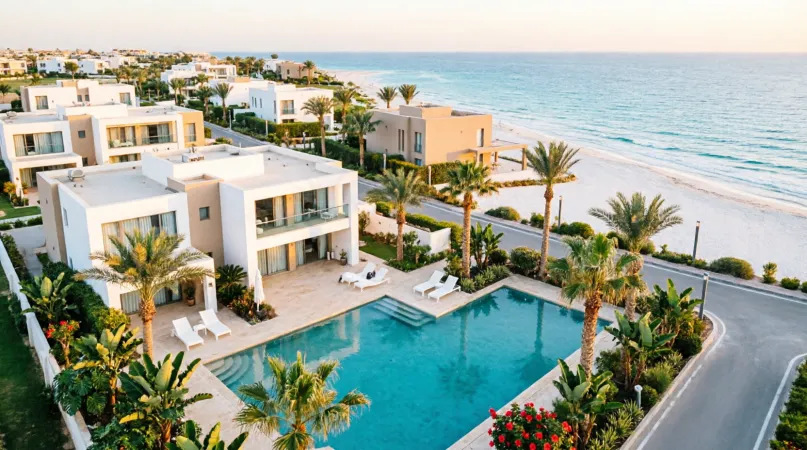
EGYPT —Sixth of October for Development and Investment Company (SODIC) has finalized a credit agreement worth EGP 7.5 billion with Commercial International Bank (CIB). The medium-term facility is designated to advance the remaining construction phases of SODIC's 280-acre June development, situated in Ras El Hekma along Egypt's North Coast, while covering related project expenditures.
A EGP 2.5 billion portion of the newly acquired funding has been deployed to fully discharge a bridge loan previously extended by CIB in March 2025. This refinancing restructuring aligns with the real estate developer's broader capital management strategy to optimize borrowing terms and sync debt obligations with project cash flows. Total outstanding debt for the firm stood at EGP 11 billion as of mid-2026, maintaining a debt-to-equity leverage ratio of 0.66x.
SODIC is a major Egyptian real estate developer listed on the Egyptian Exchange, specializing in residential, commercial, and mixed-use urban developments. Commercial International Bank is one of Egypt's largest private-sector banking institutions, offering corporate, retail, and investment banking services across the region.
The financial injection underscores growing banking sector support for high-end coastal developments along Egypt's Mediterranean littoral, particularly within the Ras El Hekma district, which has emerged as a prime hub for domestic and international real estate investment. Expanding commercial credit lines to top-tier private developers reinforces liquidity across construction supply chains, supporting momentum in sub-contracting, engineering, and building materials industries.
For institutional investors and financial markets, SODIC's deliberate strategy to scale leverage while keeping debt-to-equity ratios below 0.7x signals a disciplined approach to balance sheet expansion. By replacing short-term bridge financing with structured medium-term capital, the company stabilizes its cash balance, lowers immediate refinancing risks, and enhances long-term equity returns amid evolving macroeconomic conditions in North Africa.