
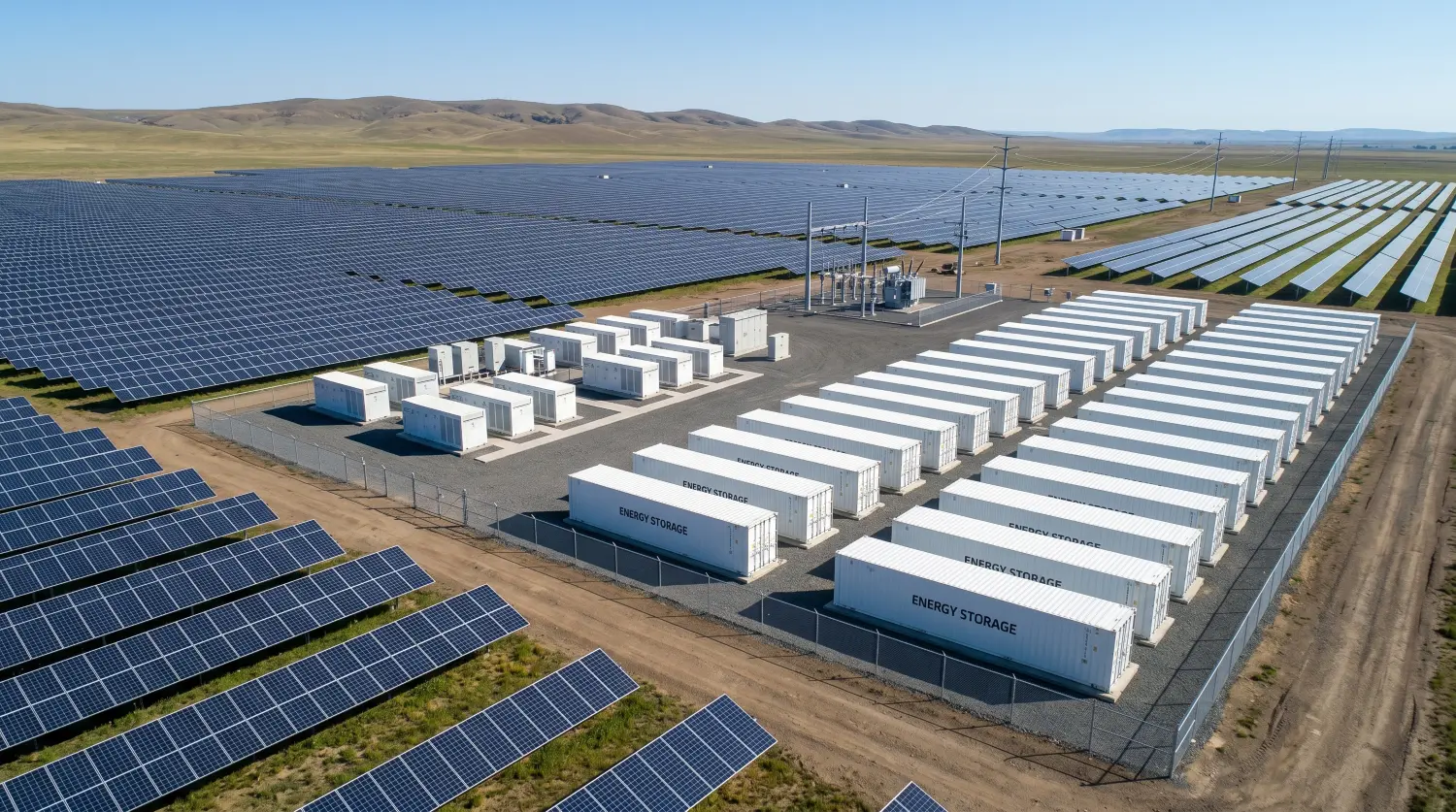
Copenhagen Infrastructure Partners has secured $510 million in project financing to construct the 420 MWdc La Esperanza hybrid solar photovoltaic and battery storage project in Mexico. Coordinated by Natixis CIB, the strategic renewable energy initiative aims to address severe grid congestion and power deficits in the Yucatan Peninsula.
Copenhagen Infrastructure Partners, managing capital through its Growth Markets Fund II, has finalized $510 million in project financing to advance the development of the La Esperanza Solar plant in Mexico. The utility-scale facility combines a 420-megawatt direct current photovoltaic generation plant with a 150-megawatt, five-hour battery energy storage system (BESS). Global financial institution Natixis Corporate & Investment Banking supported the transaction structure, acting as joint bookrunner, joint lead arranger, and green loan coordinator. Designed as a comprehensive hybrid asset, the facility will store daytime renewable output to supply electricity during peak demand windows, establishing an operational model aimed at stabilizing regional power supplies.
Copenhagen Infrastructure Partners is a global fund manager specializing in greenfield renewable infrastructure investments, overseeing portfolio assets across Europe, the Americas, and Asia-Pacific. Natixis Corporate & Investment Banking operates as the capital markets arm of France's Groupe BPCE, providing specialized financing for global energy transition assets. The deployment of the La Esperanza facility directly addresses severe capacity deficits and grid congestion across Mexico’s Yucatan Peninsula, a region historically constrained by transmission bottlenecks and rapid demand expansion. Recognized as a strategic priority by Mexico’s Ministry of Energy, the combined solar-plus-storage deployment provides necessary operational flexibility, ensuring that intermittent renewable output can be dispatched reliably to meet regional industrial and commercial load profile requirements.
Integrating utility-scale energy storage alongside solar PV represents a critical shift in regional infrastructure planning, shifting focus toward grid resilience alongside raw capacity expansion. In energy markets facing power delivery constraints, standalone generation often exacerbates voltage volatility during peak production hours. By embedding a 150-megawatt energy storage buffer directly into the generation architecture, the facility mitigates curtailment risks while assisting grid operators in balancing systemic frequency variations. Official energy framework objectives in Mexico increasingly prioritize assets capable of mitigating regional blackout risks and supporting long-term grid modernization without imposing structural strains on existing transmission lines.
For institutional investors and energy sector developers, the successful structuring of a major green loan facility for a hybrid asset in an emerging market underscores ongoing commercial confidence in utility-scale storage integration. The project sets a notable financial benchmark for subsequent private investments in hybrid renewable infrastructure across Latin America. Commercial power consumers and industrial operators in the Yucatan region stand to benefit from improved grid reliability, mitigating operational downtime caused by power outages. As energy transition frameworks continue to evolve, co-located energy storage solutions are expected to serve as the baseline architecture for future utility-scale solar projects seeking regulatory alignment and long-term off-take certainty.
About GlobeNewsInfo
GlobeNewsInfo.com is a business news platform providing latest updates on global business developments, projects, and contract opportunities across diverse sectors and regions. The platform is designed to serve as a trusted source of information for companies, investors, and professionals worldwide.