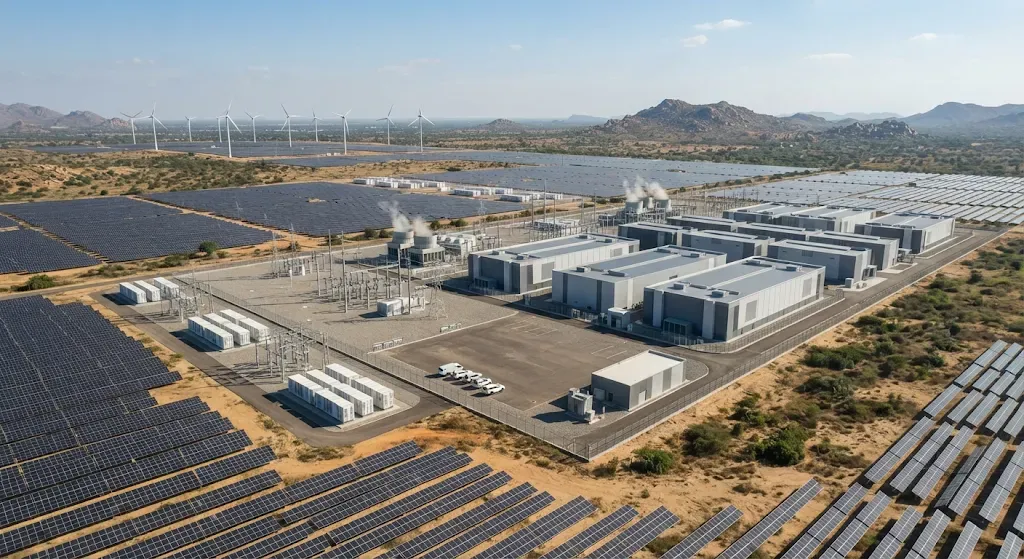
INDIA —Clean Max Enviro Energy Solutions Limited has formalized an agreement with the Andhra Pradesh Economic Development Board (APEDB) to establish an integrated clean energy ecosystem representing a capital expenditure of approximately 500 billion rupees. Clean Max Enviro Energy Solutions Limited operates as a commercial and industrial renewable energy solutions provider managing a contracted portfolio exceeding 6 gigawatts. Under the terms of the memorandum of understanding, the enterprise will develop 3 gigawatts of solar and wind generation capacity alongside 1 gigawatt of pumped storage facilities over a five-year horizon.
This massive infrastructural undertaking is designed to anchor a 2 gigawatt artificial intelligence compute factory located within the Kurnool district of Andhra Pradesh. The industrial facility is being established in collaboration with Neysa, an artificial intelligence cloud infrastructure provider backed by Blackstone that delivers GPU compute platforms. Neysa will utilize 1 gigawatt of the computational capacity as an anchor tenant. The energy infrastructure integrates solar and wind generation with battery electrical energy storage systems and pumped hydro to balance intermittent supply and meet continuous operational demands. A dedicated special purpose vehicle managed by CleanMax will apply for a distribution license to operate an independent power network within the industrial zone.
The convergence of heavy artificial intelligence workloads and dedicated renewable generation highlights a critical structural shift in industrial power consumption. Modern data centers require uninterrupted, hourly matched clean power rather than standard grid averages, necessitating co-located generation, storage, and distribution models. By bypassing traditional utility constraints through localized microgrids and dedicated storage balancing, the project addresses the escalating energy intensity of digital infrastructure while maintaining corporate decarbonization commitments.
Regional energy markets, state regulatory bodies, and digital infrastructure developers face profound operational implications from this localized generation model. The deployment tests the viability of private distribution networks within state regulatory frameworks, setting a precedent for heavy industrial consumers seeking off-grid stability. Furthermore, the integration of direct-to-chip liquid cooling and strict water allocations establishes new efficiency benchmarks for high-density computing clusters operating in water-stressed regions. Investors and stakeholders view the phased rollout, targeting 1.5 gigawatts of renewable capacity by 2029, as a test case for merchant green power delivery to emerging technology hubs.