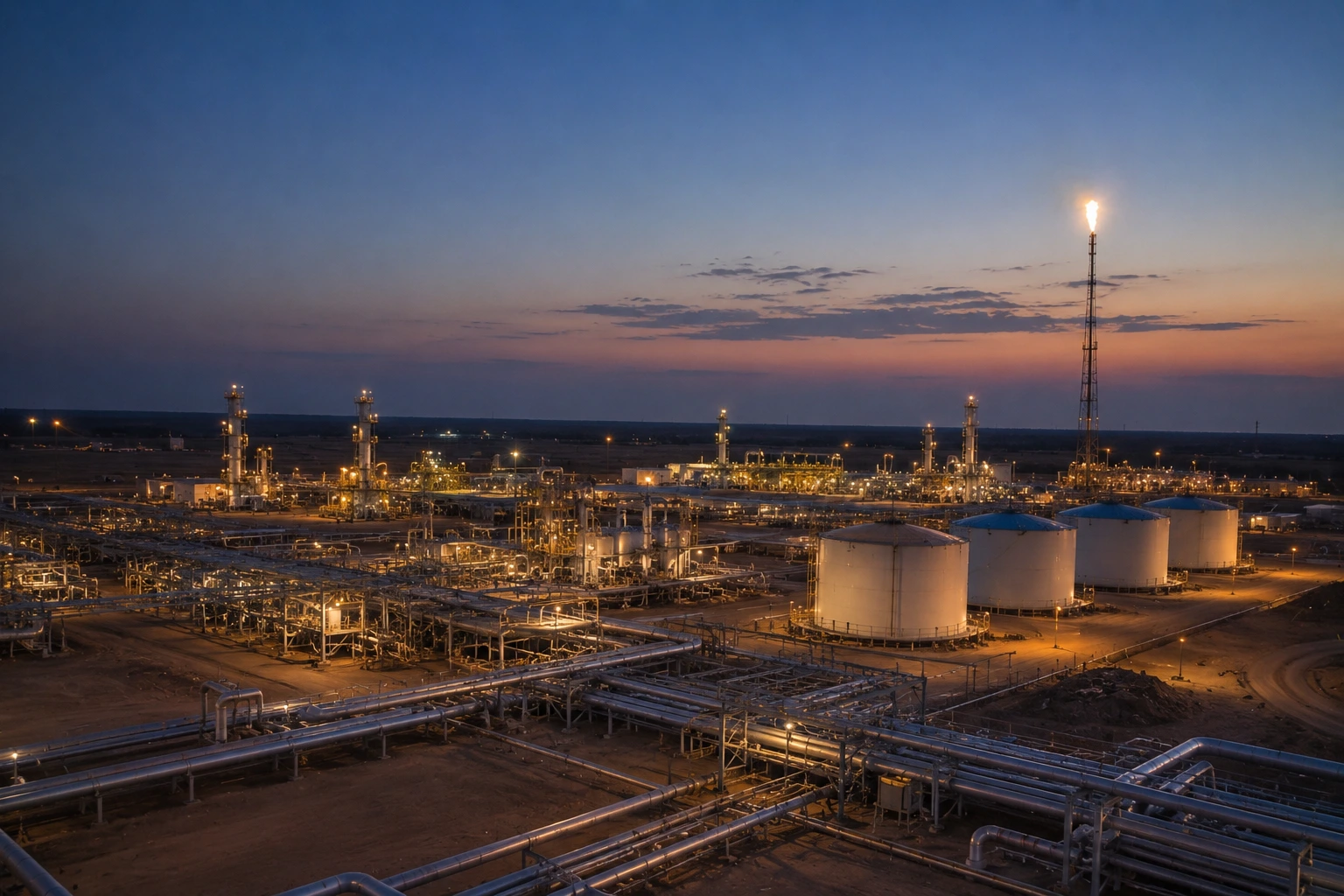
AZERBAIJAN; UNITED STATES OF AMERICA —U.S. natural gas producer Comstock Resources is dramatically restructuring its capital framework through a pair of strategic agreements valued at $2.1 billion. Under a preliminary agreement, State Oil Company of the Azerbaijan Republic will pay $1.65 billion for minority non-operated working interests across Comstock’s Legacy and Western Haynesville gas properties, alongside a 15% interest in midstream operator Pinnacle Gas Services. Concurrently, a entity affiliated with majority owner Jerry Jones will supply $450 million to fund 85% of well development costs for 18 Western Haynesville wells and 80% for nine Legacy wells over the next year.
These capital injections address balance sheet pressures while securing full operational control over vast Gulf Coast acreage. Proceeds from the SOCAR transaction are designated to lower net debt from $3.1 billion down to $1.5 billion, improving financial flexibility. Furthermore, the arrangements incorporate reversionary yield thresholds that return ownership share back to Comstock once investment return targets are satisfied. Comstock Resources is an independent energy enterprise headquartered in Frisco, Texas, specializing in shale gas exploration and production. SOCAR is Azerbaijan's state-owned integrated energy enterprise operating across global oil and gas value chains.
The cash infusion positions Comstock to scale up upstream production across its 545,000 net acres in the Western Haynesville basin. This regional expansion directly supports the rising fuel requirements of Gulf Coast liquefied natural gas export facilities, regional utility power generation, and power-intensive industrial projects including data centers. Additionally, SOCAR's participation establishes a international bridge for marketing American natural gas to foreign consumers.
This major investment underscores growing international demand for U.S. shale assets to ensure long-term energy security. Capital-intensive joint ventures allow operators to de-risk high-cost drilling programs while preserving equity value. Similar co-investment structures are likely to proliferate as domestic producers seek private funding to sustain long-term drilling schedules amidst evolving capital market conditions.