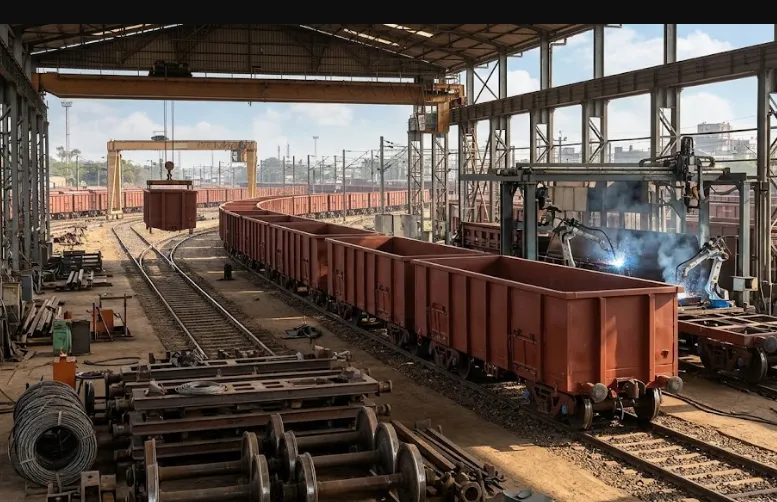
INDIA —Container Corporation of India has finalized a domestic procurement agreement valued at INR 4.86 billion with Kolkata-based manufacturer Braithwaite & Co. The regulatory disclosure details an order for 24 rakes of specialized BLSS freight wagons equipped with BVCM-type brake vans. Execution of the manufacturing mandate is scheduled for completion by June 20, 2028. Container Corporation of India operates as a Navratna public sector enterprise under the administrative control of the Ministry of Railways, functioning as a multi-modal logistics provider managing container terminals across the country. Braithwaite & Co functions as a Government of India undertaking under the Ministry of Railways, specializing in heavy engineering and railway rolling stock manufacturing.
This capital expenditure deployment underscores strategic efforts by state-backed logistics operators to upgrade heavy transport fleets and accommodate rising freight volumes. Expanding specialized rolling stock inventory addresses persistent logistical bottlenecks in containerized freight movement across domestic rail networks. The acquisition directly supports multi-modal transport optimization by ensuring high-capacity rake availability for long-haul corridor operations.
The agreement provides significant revenue visibility for public sector heavy engineering enterprises while bolstering domestic manufacturing capabilities within the railway supply chain. By keeping procurement within domestic state-owned enterprises, the transaction aligns with national industrial policies promoting indigenous manufacturing and self-reliance in heavy infrastructure equipment. Private logistics competitors and port operators stand to benefit indirectly from enhanced rail freight turnaround times and systemic network capacity expansions.
For market participants and infrastructure investors, this multi-billion rupee order signals steady capital expenditure deployment within the public rail sector. The extended execution timeline up to mid-2028 points to structured production schedules that insulate suppliers from immediate input cost volatility while ensuring steady cash flow generation. Equipment manufacturers and raw material suppliers linked to the railway supply chain can anticipate sustained demand as state operators continue upgrading rolling stock fleets to meet long-term economic growth targets.