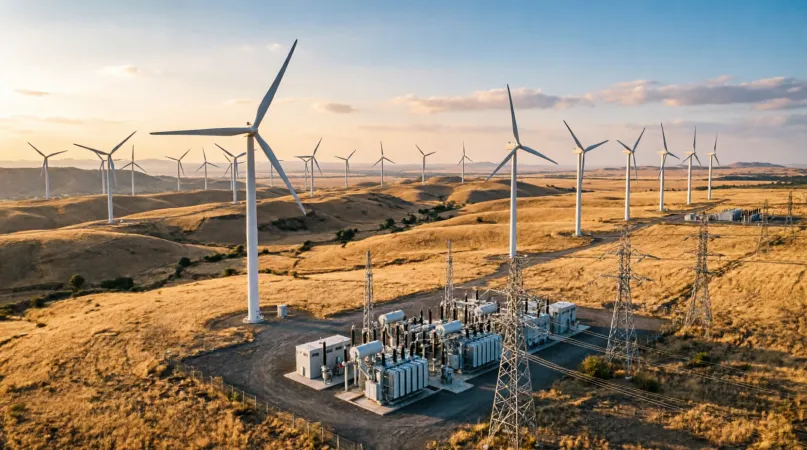
AUSTRALIA —Copenhagen Infrastructure Partners, acting for its fifth flagship fund, has completed the acquisition of the Gawara Baya hybrid renewable energy project in North Queensland, Australia. The transaction follows a final investment decision and the successful closure of a AUD 1.7 billion debt facility syndicated across ten financial institutions. The asset, purchased from domestic developer Windlab, integrates a 408 megawatt onshore wind facility with a 104 megawatt battery energy storage system. Construction is scheduled to commence immediately, with full commercial operations targeted for 2030.
This development underscores the accelerating capital deployment into hybrid renewable infrastructure to address grid stability challenges. By pairing wind generation with grid-forming battery storage, the project mitigates intermittency risks, ensuring a consistent power supply capable of servicing approximately 240,000 households. The initiative is projected to abate 1.2 million tonnes of annual carbon emissions, directly supporting national decarbonization mandates.
The acquisition highlights the critical role of institutional capital in scaling energy transition projects within the Asia-Pacific region. Revenue visibility is secured through long-term offtake agreements with major energy retailers Stanwell and SmartestEnergy, supplemented by participation in the Australian Government Capacity Investment Scheme. This policy mechanism de-risks the development phase, encouraging further private sector investment in regional grid infrastructure.
For institutional investors and infrastructure funds, this transaction validates the growing market for hybrid renewable assets that offer predictable, long-term cash flows. Copenhagen Infrastructure Partners, a global fund manager established in 2012 that oversees approximately EUR 43 billion in assets across more than 30 countries, continues to expand its footprint in high-growth energy markets. The project is also anticipated to generate over AUD 200 million in regional economic activity and support up to 500 jobs, reinforcing the socioeconomic benefits of large-scale renewable energy deployments.