
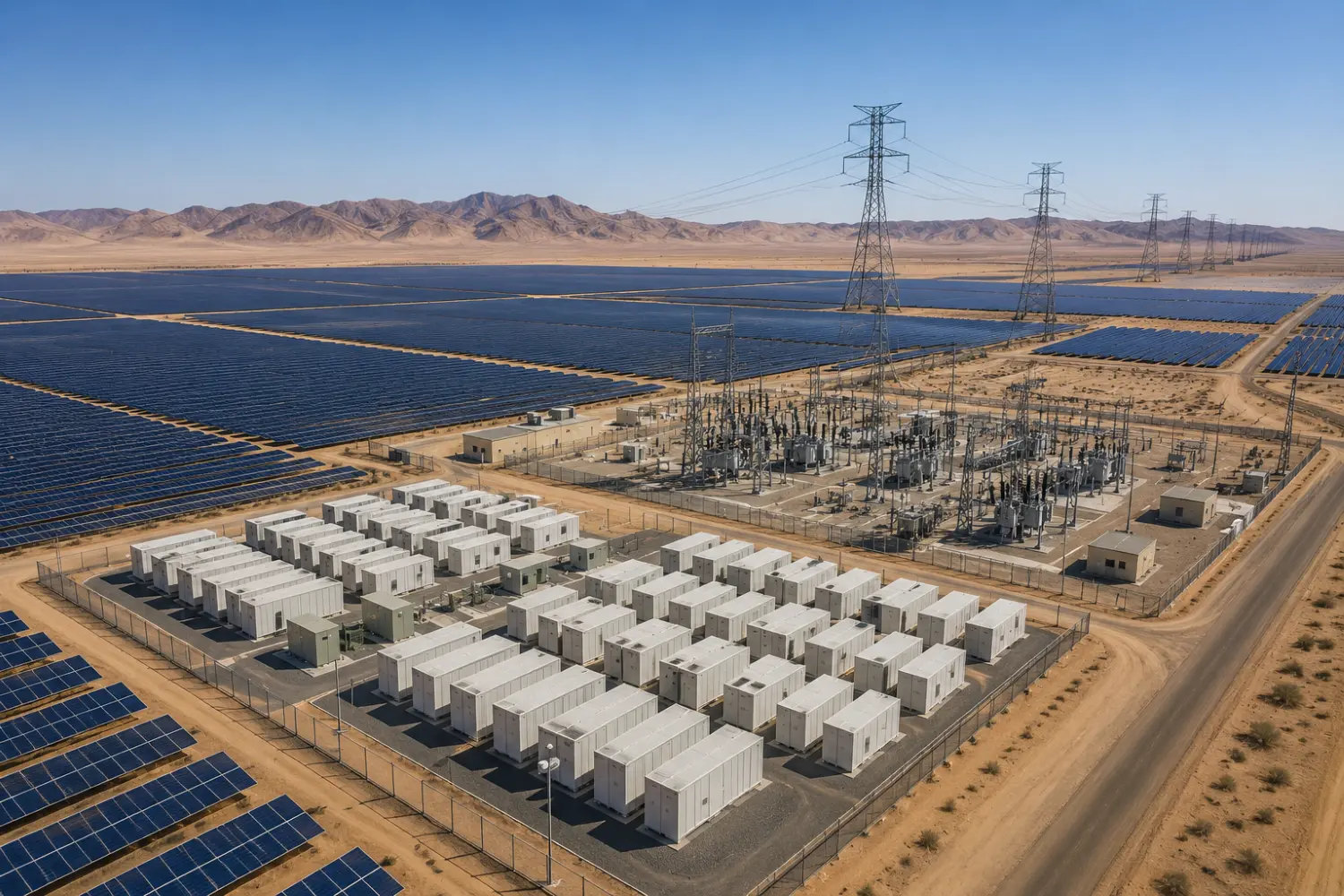
European Energy has secured GBP 58.1 million in debt financing from Danske Bank to build the Indian Queens hybrid renewable energy facility in Cornwall. Combining solar capacity with utility-scale battery storage, the co-located development optimizes grid connection efficiency and supports the UK's broader energy transition targets.
Danish renewable energy developer European Energy has obtained GBP 58.1 million in project financing from Danske Bank to advance the construction of a co-located clean power installation in southwestern England. Located in Cornwall, the Indian Queens scheme integrates a 68 MW photovoltaic plant alongside a 47.5 MW / 95 MWh battery energy storage system (BESS). Commercial operations across both components are scheduled to begin in 2027.
Founded in 2004 and headquartered in Søborg, Denmark, European Energy develops, constructs, and operates wind, solar, and Power-to-X projects globally, holding a multi-gigawatt pipeline of clean energy assets. Danske Bank, one of Scandinavia's prominent financial services institutions, provides commercial banking, corporate finance, and specialized project debt solutions to support green infrastructure initiatives across Northern and Western Europe.
The Cornish development incorporates a single shared grid connection for both generation and energy storage assets. This combined structure optimizes network capacity usage by regulating output fluctuations and supplying flexibility services back to the electricity grid. Long-term commercial stability is reinforced through a corporate Power Purchase Agreement (cPPA) for solar generation alongside a Capacity Market Contract (CMC) securing dedicated grid-balancing revenues for the storage asset.
The deployment of co-located hybrid facilities highlights an expanding operational strategy across the British power market, where grid congestion and transmission delays present significant bottlenecks for new generation assets. By pairing solar generation with localized battery storage under a unified grid node, project operators can capture peak pricing periods, reduce curtailment risks, and improve overall asset yield.
For institutional investors and debt providers, multi-revenue structure arrangements integrating corporate PPAs with capacity market frameworks represent an increasingly bankable template for clean energy assets. This financing structure mitigates revenue volatility while facilitating the sustained expansion of firm, flexible renewable infrastructure required to support the decarbonization of the UK national grid.
About GlobeNewsInfo
GlobeNewsInfo.com is a business news platform providing latest updates on global business developments, projects, and contract opportunities across diverse sectors and regions. The platform is designed to serve as a trusted source of information for companies, investors, and professionals worldwide.