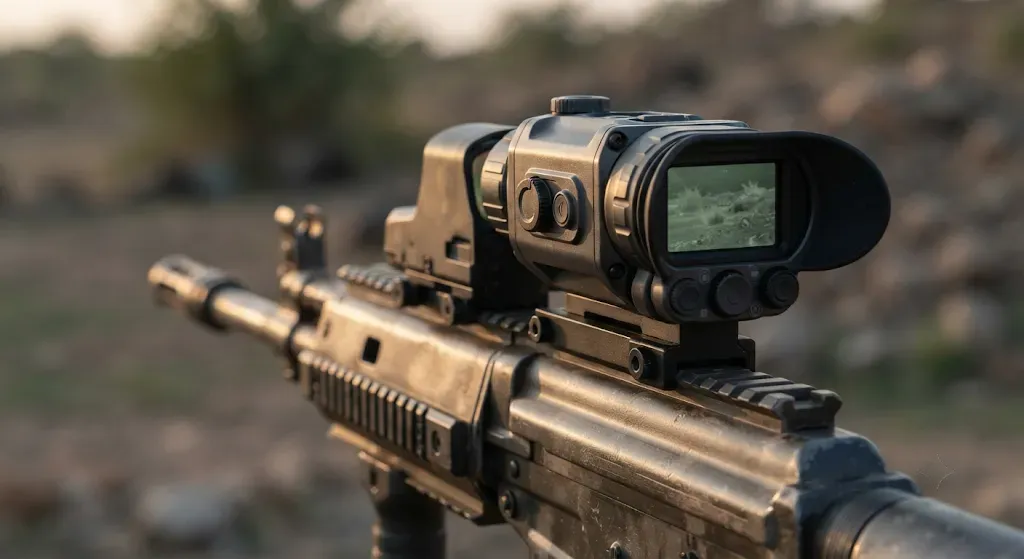
INDIA —India's Ministry of Defence has placed a domestic supply order valued at approximately INR 356.2 million, with Bengaluru-based Tonbo Imaging for clip-on thermal weapon sights designed for assault rifles along with related support equipment. Scheduled for delivery across two batches within 52 weeks of the contract effective date, the agreement carries a 24-month warranty. It also grants the buyer discretionary authority to exercise option and repeat order clauses, each covering up to 50 percent of the initial order volume.
Founded in 2003 and transitioned into a defence product manufacturer in 2012, Tonbo Imaging operates as an Indian defence electronics manufacturer listed on domestic stock exchanges. The company develops and produces thermal imaging cores, weapon sights, surveillance and targeting systems, missile seekers, and fire control electronics with full internal intellectual property ownership.
For military end users, compact uncooled thermal sights enhance night operations and low-visibility engagement flexibility by allowing rifle mounting as well as handheld or helmet-mounted use. From a broader commercial perspective, this contract highlights steady domestic demand for infantry electro-optics and illustrates how follow-on clauses can expand initial order values without new tendering cycles.
The transaction directly affects Indian defence electronics manufacturers, optical component suppliers, and specialized assembly vendors aligned with domestic procurement frameworks. Because the equipment is engineered and manufactured domestically under India's indigenous defence acquisition framework, the award reinforces policy efforts to build local capabilities in sensors, imaging hardware, and embedded electronics while reducing reliance on foreign suppliers.
For executives and institutional investors, contract wins of this scale provide revenue visibility over a roughly one-year execution window alongside potential upside if option or repeat clauses are triggered. At the same time, delivery execution across two lots, product acceptance milestones, and customer discretion over follow-on volumes remain key operational variables to monitor across the defence manufacturing value chain.