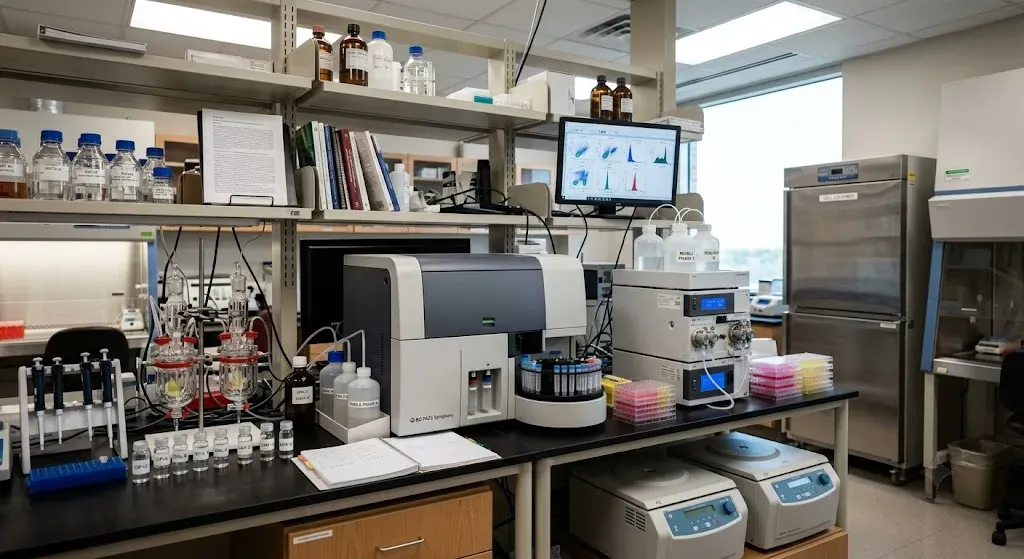
UNITED STATES OF AMERICA —The Defense Advanced Research Projects Agency has granted RxMP Therapeutics a contract valued at up to $10.7 million to accelerate the development of its lead product candidate, RMP-402. Administered through the Resuscitation and Prevention of Ischemia-Induced Dysfunction initiative, the funding is designated for completing Investigational New Drug enabling activities, scaling manufacturing processes, and finalizing regulatory submission packages. This financial support targets the transition of the therapy from late preclinical stages toward initial human clinical trials.
This development is critical because uncontrolled hemorrhage remains a primary cause of preventable mortality in both combat and civilian trauma scenarios. RMP-402 functions as a biomimetic hemostatic agent, utilizing manufactured allogeneic red cell membrane particles to accelerate clotting at active bleeding sites without elevating the risk of systemic thrombosis. By providing a shelf-stable alternative to traditional blood products, the therapy addresses significant logistical constraints related to storage, availability, and rapid deployment in austere environments.
The broader biotechnology and defense healthcare sectors are increasingly prioritizing the development of synthetic or biomimetic blood substitutes to enhance battlefield survivability and emergency medical response. Government initiatives like the Resuscitation and Prevention of Ischemia-Induced Dysfunction program aim to establish viable regulatory and commercial pathways for advanced hemorrhage countermeasures. This policy focus directly impacts trauma care providers, military medical logistics planners, and biopharmaceutical developers focused on acute care solutions.
For RxMP Therapeutics, a Seattle-based biopharmaceutical company specializing in rapid hemorrhage control therapies, this non-dilutive federal funding validates the clinical and strategic viability of its proprietary platform. The organization focuses on advancing novel treatments to manage excessive bleeding in acute care environments. Securing a substantial government contract de-risks the capital-intensive process of regulatory approval and manufacturing scale-up. Furthermore, successful progression toward Emergency Use Authorization or full regulatory clearance could position the company to capture a significant share of the global trauma and surgical bleeding market, which is valued at approximately $12 billion annually.