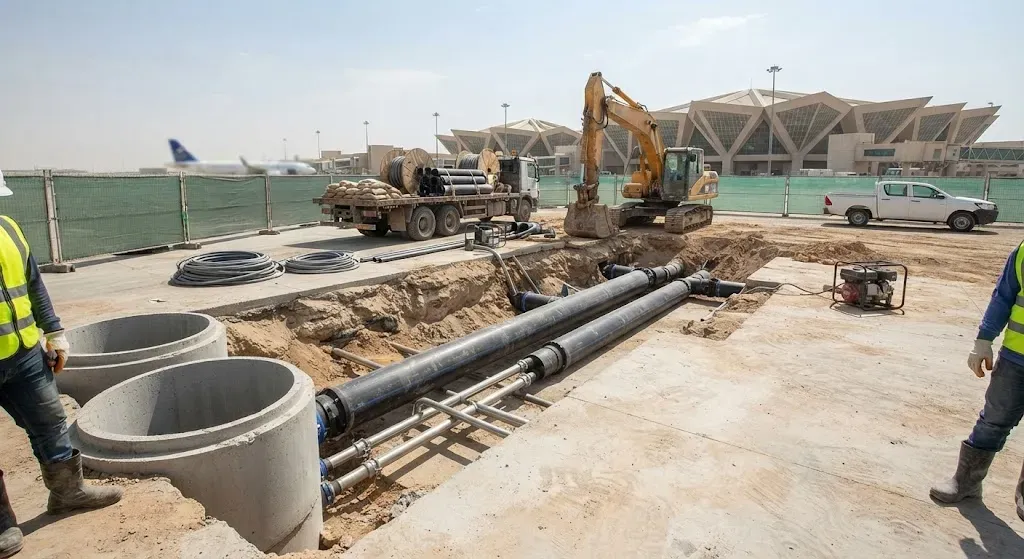
INDIA —The Delhi government has sanctioned a massive Rs.179.69 billion initiative dubbed “One Zone, One Operator” to overhaul the capital's sewerage infrastructure. Approved during a recent Delhi Jal Board (DJB) meeting chaired by Water Minister Parvesh Verma, the new framework is designed to shift the city's approach from reactive, complaint-based repairs to planned preventive maintenance. Under this operational model, Delhi will be divided into six distinct zones. A single operator in each zone will be assigned end-to-end responsibility for maintaining sewer lines, manholes, and pumping stations, as well as handling public complaints.
To ensure stringent accountability and modernization, the system will integrate advanced technologies, including geo-tagged inspections, 100% mechanical and robotic sewer cleaning, and real-time oversight via a central command centre. Payments to the private operators will be directly linked to strict performance metrics, aiming to accelerate complaint resolution and significantly reduce instances of sewer overflows. Currently, the DJB manages an extensive network comprising 11,212 kilometres of sewer lines, over 6.68 lakh manholes, and 145 pumping stations across 68 assembly constituencies.
In addition to the sewerage overhaul, the board approved a Rs.60.44 billion project to transform South Delhi's water supply infrastructure, targeting continuous water delivery and a reduction in non-revenue water to below 15%. This will be achieved through the installation of smart meters, bulk flow meters, and chlorine sensors. The DJB also rolled out a revised Rainwater Harvesting Policy for 2026 and committed Rs.73.73 billion under the National Mission for Clean Ganga to construct 13 new sewage treatment plants, a critical step toward minimizing untreated waste entering the Yamuna River.