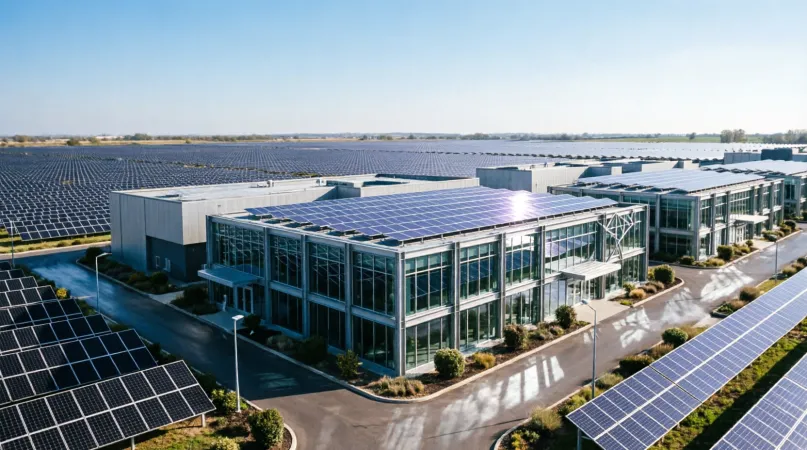
UNITED STATES OF AMERICA —A major capital expansion in the American solar manufacturing landscape is underway following the completion of an $835 million debt and equity financing round by Suniva. The funding will support the construction of a 4.5 GW monocrystalline silicon solar cell facility in Laurens County, South Carolina, while expanding total operational capacity to 5.5 GW alongside its current 1 GW plant in Norcross, Georgia. The project involves an estimated $600 million direct capital expenditure, utilizes an existing 621,468-square-foot structure, and is projected to generate 564 advanced manufacturing jobs upon operational status in late 2027.
Suniva is an American manufacturer specializing in high-efficiency crystalline silicon photovoltaic solar cells, operating as one of the few domestic producers at commercial scale in the United States. The company previously announced a pending definitive reverse merger agreement with SUNation Energy, Inc., a Nasdaq-listed provider of residential and commercial solar systems and battery storage services, under which the combined entity will operate as Suniva.
This aggressive scaling effort comes as domestic clean energy supply chains face heightened pressure to fulfill localized demand and decrease exposure to overseas manufacturing risks. By anchoring supply agreements with major U.S. solar distributors and securing a domestic component chain, the capital deployment lowers execution risks for utility-scale solar adopters. The regional economy in South Carolina's Upstate region stands to benefit through industrial diversification and high-tech job growth.
From an industry-wide perspective, the influx of capital underscores growing institutional interest in US-based renewable energy infrastructure. The availability of locally sourced solar cells provides downstream project developers with a reliable procurement path to insulate against global trade bottlenecks, regulatory policy changes, and international shipping vulnerabilities. Financiers and corporate stakeholders are increasingly prioritizing supply assurance, positioning domestic equipment producers as critical catalysts for regional clean energy deployment.
For market investors and enterprise supply partners, this expansion signals a strong commercial trajectory for U.S. solar component manufacturing. Long-term product offtake agreements already tied to the new output highlight sustained domestic demand and point to enhanced market stability for domestic clean technology ventures amid structural shifts in the energy sector.