MONGOLIA —The European Bank for Reconstruction and Development (EBRD) is providing a financing package of up to US$25 million to APU, Mongolia’s largest and oldest beverage producer, to support investments aimed at improving operational sustainability and resource efficiency. The package comprises a senior EBRD loan of up to US$20.25 million and up to US$4.75 million in concessional financing from the Strategic Climate Fund under the Climate Investment Funds.
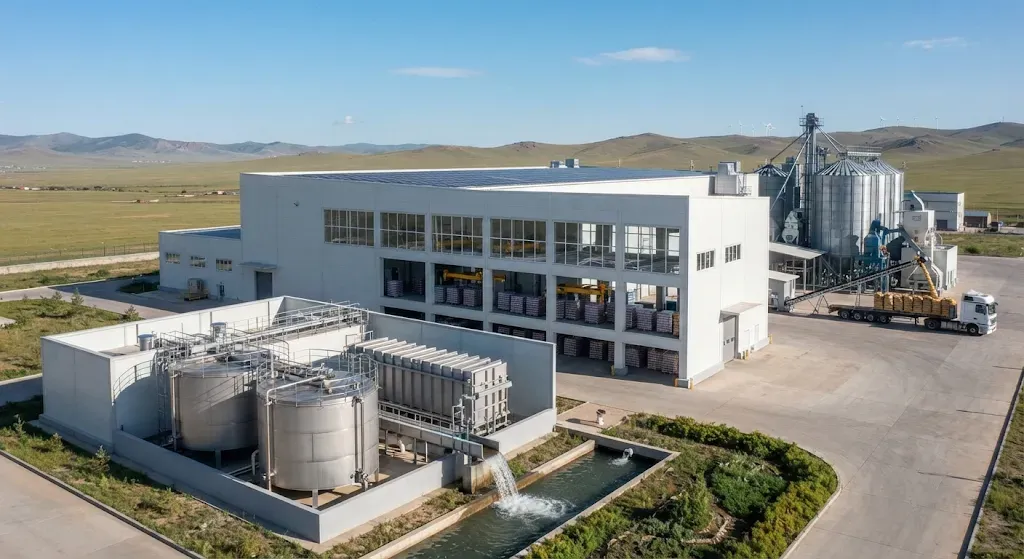
The financing will support three major investments: an automated distribution warehouse, a protein livestock feed production facility using distillery and brewery by-products, and a wastewater treatment plant. APU is majority-owned by Shunkhlai Group, one of Mongolia’s major business conglomerates. The company operates across beverage production and related activities and has a significant role in Mongolia’s food and beverage supply chain.
A key component is the planned livestock feed facility, which will convert spent grain generated by APU’s brewing and distilling operations into dried distillers grains with solubles (DDGS). The facility is expected to be the first of its kind in Mongolia and will allow the by-product to be stored and transported for use throughout the year. This could improve feed availability for dairy producers during Mongolia’s dry and severely cold periods, while creating a productive use for an industrial by-product.
The wastewater project will add treatment capacity of up to 1,600 cubic metres per day and is designed to recover as much as 75% of the water used across APU’s production facilities. Recovered water is expected to be reused within operations and potentially supplied to municipal services and industrial users. The automated distribution centre will also increase logistics capacity and improve reliability across APU’s distribution network.
The investment has broader implications for Mongolia’s manufacturing, food and agriculture sectors because it links industrial waste recovery, water reuse and supply-chain infrastructure within a single corporate investment programme. Converting spent grain into livestock feed can strengthen connections between beverage manufacturing and dairy production, while water recovery may reduce industrial demand for freshwater resources.
For businesses and investors, the financing demonstrates the growing use of blended climate finance to fund resource-efficiency projects in Mongolia’s private sector. The combination of commercial lending, concessional capital and technical support may also provide a financing model for other industrial companies seeking to upgrade production systems while reducing environmental costs. The EBRD has financed 173 projects in Mongolia worth a combined US$3.2 billion over the past two decades, with private companies accounting for about 90% of its lending in the country.