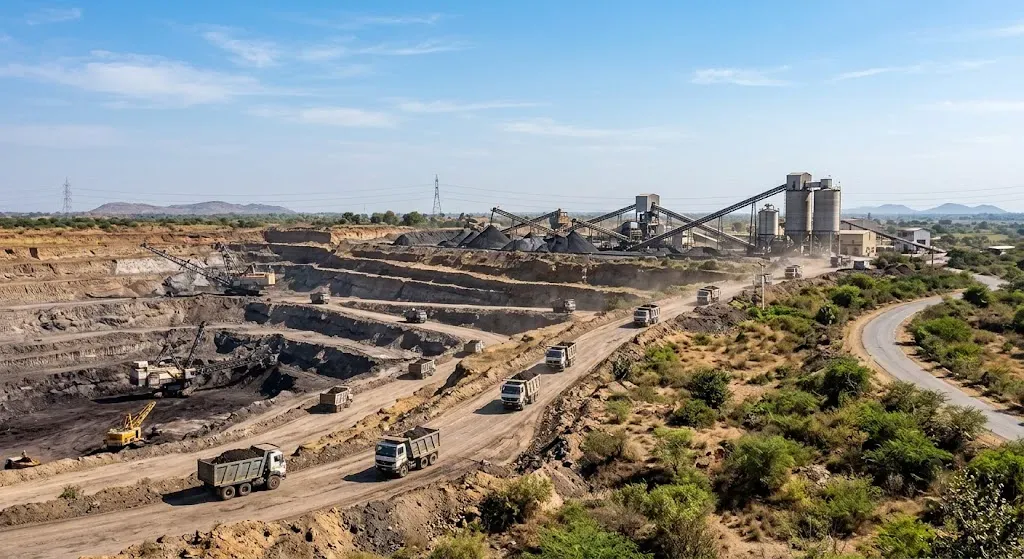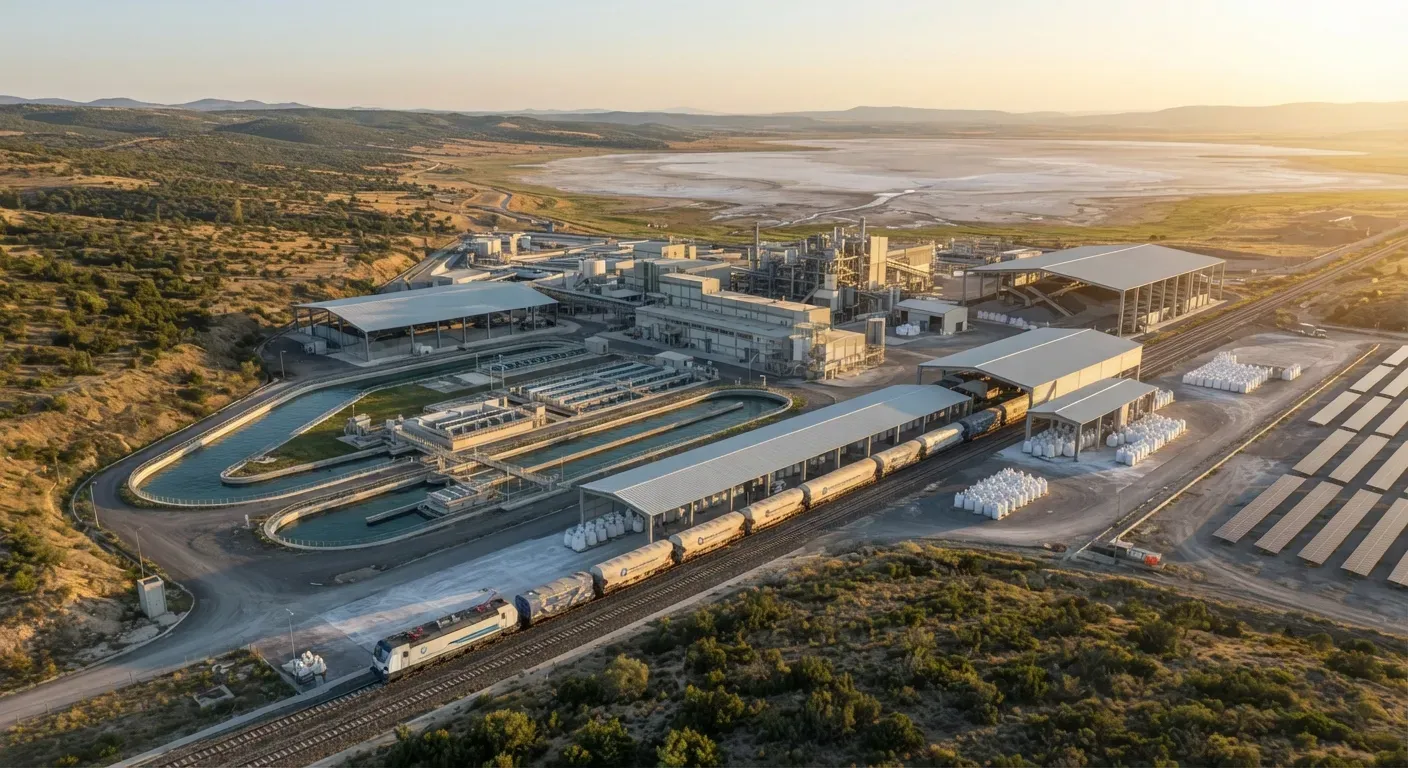
TURKEY —The European Bank for Reconstruction and Development (EBRD) has approved an eight-year secured financing facility of up to US$ 250 million for WE Soda to fund operational upgrades at its Kazan Soda subsidiary in Türkiye. The capital targets resource efficiency, circular material recovery, lower energy intensity, and reduced reliance on external inputs at the facility.
WE Soda is a major global producer of natural soda ash operating in Türkiye and the United States, exporting roughly four-fifths of its Turkish output to international buyers. The European Bank for Reconstruction and Development (EBRD) is a multilateral development bank financing private and public projects across its regions of operation, with cumulative commitments in Türkiye exceeding €27 billion since 2009.
Planned investments center on treated municipal wastewater reuse, closed-loop cooling circuits, process material recovery, and a new rail link designed to shift freight away from road transport. The programme also encompasses pilot production lines for higher-value grades of sodium bicarbonate.
For export-oriented mineral producers, tightening water availability and rising logistics and energy costs increasingly weigh on unit economics and compliance. By internalising water and material loops and adding rail capacity, the operator addresses physical supply risks while curbing scope emissions and transport bottlenecks.
The initiative spans industrial minerals, freight rail logistics, municipal water reuse, and downstream chemical derivatives. Soda ash feeds glassmaking, detergents, chemicals, and water and flue-gas treatment, making supply reliability and carbon intensity relevant to industrial customers across Europe and global export markets.
For corporate borrowers and institutional lenders, linking long-term debt to circularity and modal shift illustrates how heavy industry can protect margins without waiting for radical process reinvention. Investors tracking industrial decarbonisation should watch execution on rail integration, wastewater reclamation, and commercial scaling of higher-value sodium bicarbonate grades.