EGYPT —The European Bank for Reconstruction and Development (EBRD) has approved financing of up to EGP 585 million for Egyptian logistics operator Marine & Engineering Services Company, known as Mesco. The funding is earmarked for expanding Mesco’s flatbed trucking fleet, enlarging logistics facilities across key maritime gateways, and acquiring supporting operating machinery and equipment.
Founded in 1983, Mesco operates across freight transport, warehousing, and port-related services in Egypt. The financing package also includes technical cooperation focused on mapping viable electric truck routes, assessing infrastructure and operational needs, structuring a phased fleet electrification roadmap, and strengthening corporate governance standards.
Expanding inland hauling and storage capacity around Alexandria, Port Said, Damietta, and Sokhna addresses bottlenecks where maritime cargo transfers meet overland distribution. For supply chain managers and importers, tighter coordination between port terminals and road freight reduces dwell times and improves schedule reliability along high-volume trade corridors.
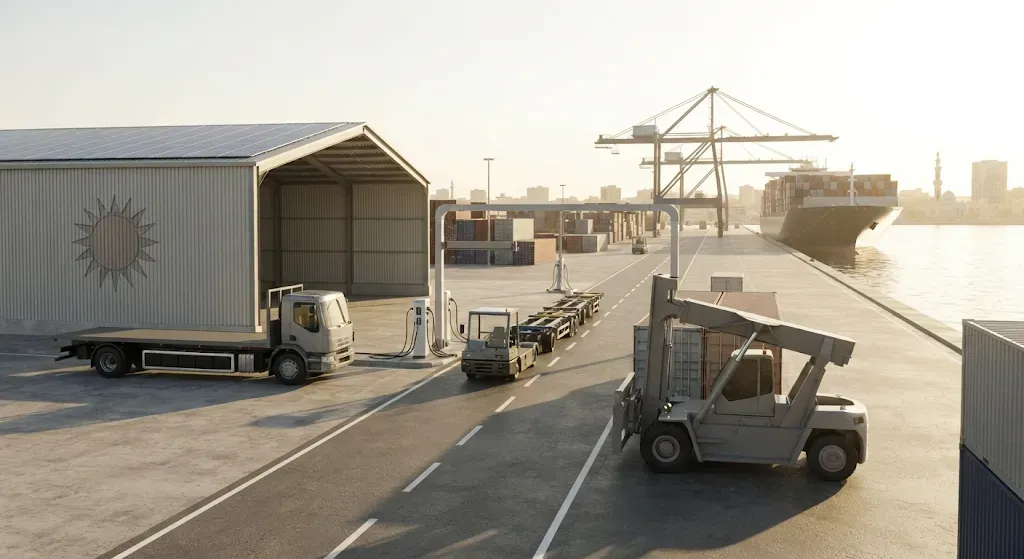
Introducing electric yard equipment and evaluating electric truck deployment place practical decarbonization at the center of commercial freight operations. Rather than treating green transition as a standalone compliance exercise, the structure ties lower-emission equipment directly to yard throughput and route economics in an energy-intensive sector.
The transaction aligns with Egypt’s broader push to position its ports and transport corridors as a regional trade and logistics hub while building on nearly €17 billion in EBRD financing across 245 projects in the country since 2012. Alongside the credit facility, governance advisory signals an effort to professionalize internal controls as domestic operators scale.
For regional logistics providers, industrial shippers, and equipment suppliers, development-backed lending highlights growing demand for modern port-side storage, electric yard machinery, and feasibility work around heavy-duty electrification. Companies positioning themselves in Egypt’s freight ecosystem face rising expectations around operational resilience, emissions tracking, and institutional governance as they compete for institutional capital and enterprise contracts.