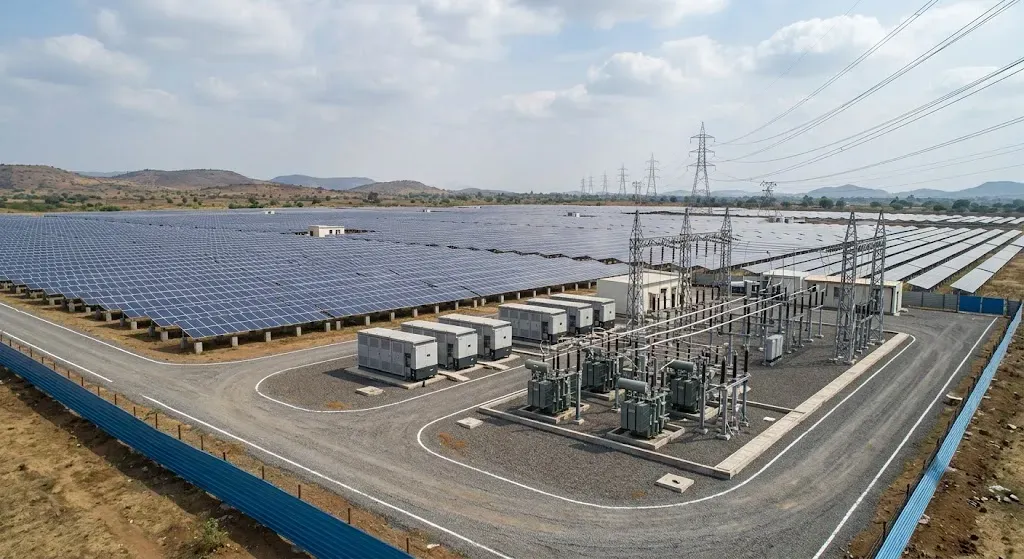
EGYPT —The European Investment Bank (EIB), through its development arm EIB Global, is extending a loan of up to USD 90 million for the first phase of the Dandara Solar PV and battery energy storage project in Egypt. The financing is backed by the European Union’s European Fund for Sustainable Development Plus (EFSD+), with the EIB participating alongside the European Bank for Reconstruction and Development (EBRD) and the African Development Bank (AfDB). Located in Qena Governorate, the project is designed to provide renewable power to a major industrial consumer.
The first phase comprises a 569 MWp solar photovoltaic plant and a battery energy storage system with 100 MWh of capacity. Dandara Solar Power S.A.E., the project company owned by Norwegian renewable energy developer Scatec, will develop, build, operate and maintain the facility. Construction is expected to begin shortly, and commercial operations are scheduled for April 2028. Based on current estimates, the plant is expected to generate approximately 1,500 GWh of electricity during its first year of operation.
Electricity will be supplied to Misr Aluminium, also known as EgyptAlum, under a long-term power purchase agreement. The company is Egypt’s largest aluminium producer, and its payment obligations under the agreement are supported by a guarantee from the Egyptian Ministry of Finance. This structure is intended to provide a defined commercial framework for the project while directing renewable electricity to an energy-intensive manufacturing operation.
The investment links renewable energy deployment with the competitiveness of Egypt’s aluminium industry. Aluminium production requires substantial electricity, making power sourcing an important factor in operating costs and the carbon intensity of output. Replacing part of the electricity supplied from fossil-fuel-based sources with solar generation could reduce production-related emissions and help EgyptAlum respond to changing environmental expectations in international markets. Battery storage may also help align renewable generation with industrial electricity demand, although the system’s operating profile has not been specified.
The project supports Egypt’s objective of generating 42% of its electricity from renewable sources by 2030. It also reflects cooperation between European development finance institutions and the EU in mobilising capital for clean energy infrastructure in North Africa. The EFSD+ guarantee helps support the financing structure, while participation by the EIB, EBRD and AfDB distributes project funding across multiple development lenders.
For investors and industrial businesses, Dandara illustrates how long-term electricity purchase arrangements can underpin large-scale renewable projects serving manufacturing customers. The sovereign-backed payment guarantee is a material feature of the project’s contractual risk framework, while the participation of multilateral lenders provides long-term financing support. The EIB is the European Union’s lending institution, financing projects aligned with EU policy priorities, while Scatec develops and operates renewable energy assets in multiple markets. The project’s delivery and operating performance will be relevant to Egypt’s efforts to expand renewable generation and lower the carbon intensity of industrial exports.