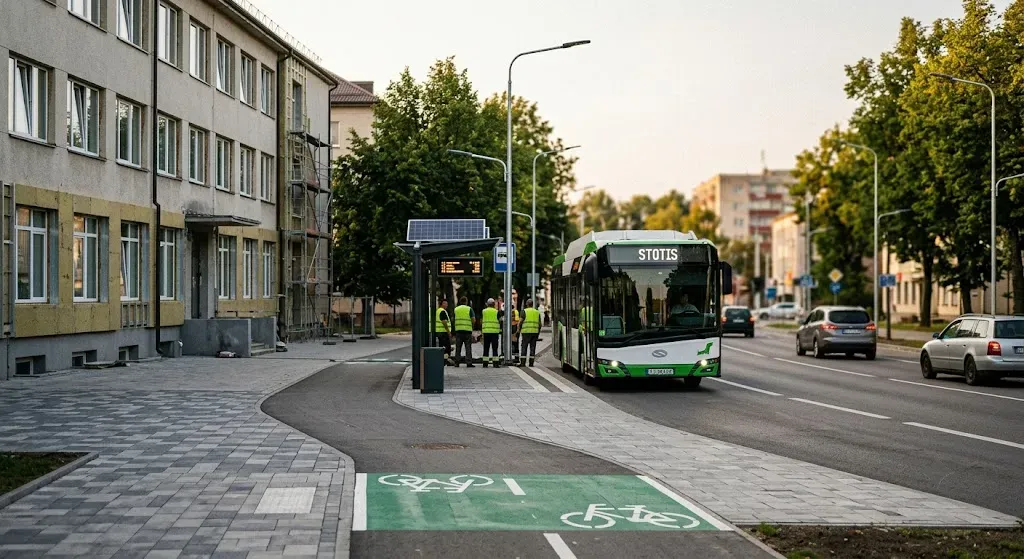
LITHUANIA —The European Investment Bank (EIB) has committed a €20 million financing facility to the Lithuanian municipality of Tauragė to accelerate its municipal transformation initiatives. The capital injection targets key urban sustainability projects, including the construction of a 16.9-kilometer cycling network, the procurement of zero-emission transit vehicles, waterfront revitalization along the Jūra River, and comprehensive energy-efficiency overhauls for public buildings and educational facilities. This funding operates within a broader municipal expenditure framework exceeding €110 million, drawing from combined European Union and local budgetary allocations. Furthermore, specialized advisory backing through the InvestEU framework will facilitate the implementation of sustainable transport initiatives, aligning with the municipality's target to achieve comprehensive climate neutrality by the end of the decade.
This financial allocation holds significant strategic value for mid-sized municipalities striving to execute aggressive environmental targets under tight operational timelines. By bridging municipal budgets with institutional development capital, the initiative validates a scalable financing blueprint for smaller urban centers attempting complex green transitions. The structured advisory support mitigates project execution risks, ensuring that infrastructure investments in sustainable mobility and municipal efficiency deliver measurable long-term operational savings and reduced carbon footprints. For institutional investors and policy planners, the transaction highlights the increasing viability of municipal green bonds and targeted development loans in secondary European markets.
The primary stakeholders affected by this development include regional construction contractors, public transport operators, municipal utility providers, and local residents across the Tauragė district. Industrial sectors focused on renewable energy integration, energy-efficient building materials, and electric transit manufacturing stand to benefit from upcoming public procurement pipelines. Regionally, the initiative directly impacts the Baltic policy landscape by serving as a benchmark for the remaining European cities committed to accelerated decarbonisation under regional smart city frameworks, while concurrently reinforcing economic resilience along eastern border territories.
Corporate entities and investors evaluating this market development must account for upcoming tender opportunities within municipal civil engineering, public transport fleet modernization, and structural energy retrofitting. The integration of international development banking with municipal planning creates structured, lower-risk entry points for private sector participation in public infrastructure projects. Market participants should monitor similar financing mechanisms across European cohesion regions, as municipalities increasingly leverage institutional credit lines to meet mandatory environmental mandates without overextending local tax revenues.