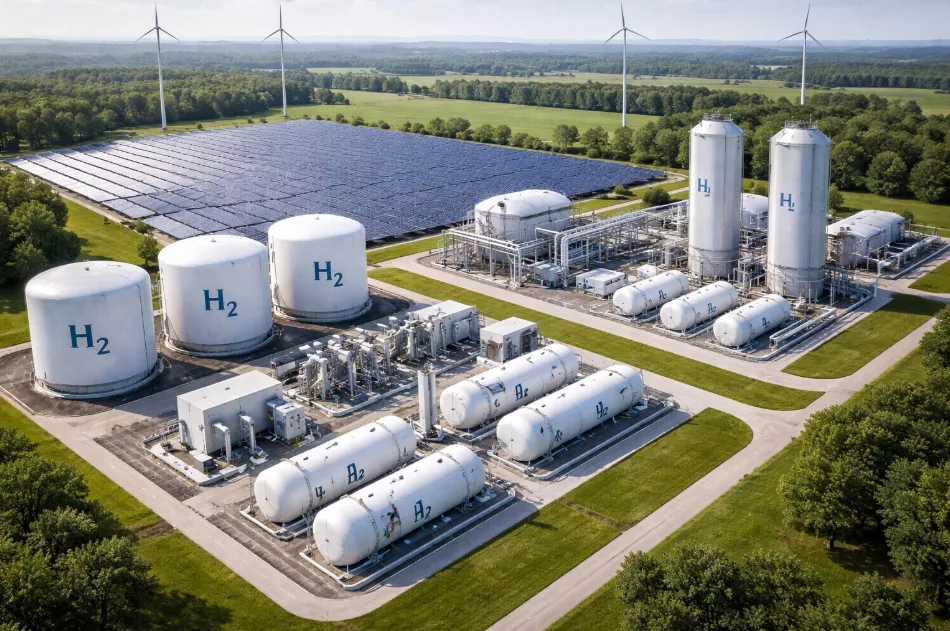
AUSTRIA —The European Investment Bank (EIB) has authorized a €450 million term loan to support OMV Aktiengesellschaft in constructing a massive renewable hydrogen plant in Bruck an der Leitha, Lower Austria. Valued at €600 million in total capital expenditure, the 140-megawatt electrolysis facility is slated to become operational by the end of 2027. OMV operates as a Vienna-headquartered integrated chemicals, fuels, and energy enterprise transitioning toward net-zero operations, while the EIB functions as the lending arm of the European Union, specializing in long-term infrastructure and climate finance. Once completed, the installation will generate an estimated 23,000 metric tons of green hydrogen annually, utilizing strictly renewable power sources.
This infrastructure deployment represents a critical operational pivot for the region's downstream energy sector. By integrating industrial-scale electrolysis directly into its supply chain, the energy corporation can systematically replace fossil-derived hydrogen with zero-emission alternatives at its Schwechat refinery. This localized production capacity is projected to eliminate approximately 150,000 tons of carbon dioxide equivalent per year, cutting the refinery's direct operational emissions by roughly ten percent. Consequently, the project validates the commercial viability of deploying large-scale green hydrogen to clean up hard-to-abate industrial processes, which have historically relied heavily on natural gas for their high-heat and chemical synthesis requirements.
The financial backing aligns seamlessly with broader continental objectives designed to secure energy independence and accelerate industrial decarbonization. By substituting imported fossil fuels with domestically produced renewable hydrogen, the facility directly supports the European Union's stringent climate targets and energy security frameworks. Furthermore, this localized supply chain lays the necessary foundation for producing advanced sustainable aviation fuels and other low-carbon chemical feedstocks. Policymakers view such public-private financing structures as essential catalysts for scaling up Europe's green hydrogen economy, ensuring the continent remains industrially competitive while adhering to ambitious net-zero timelines.
For institutional investors and energy transition stakeholders, the massive debt facility underscores the increasing willingness of multilateral lenders to underwrite transition assets for traditional oil and gas majors actively restructuring their portfolios. The project functions as a cornerstone of the Austrian firm's long-term corporate strategy, which targets 900 kilotons of renewable fuel and chemical feedstock capacity by the end of the decade. As legacy petrochemical companies face mounting pressure to demonstrate tangible decarbonization roadmaps, securing competitive concessional capital for mega-projects like this provides a crucial operational advantage. Market participants can anticipate similar capital-intensive joint ventures as the refining industry increasingly pivots toward sustainable manufacturing processes to protect long-term enterprise value.