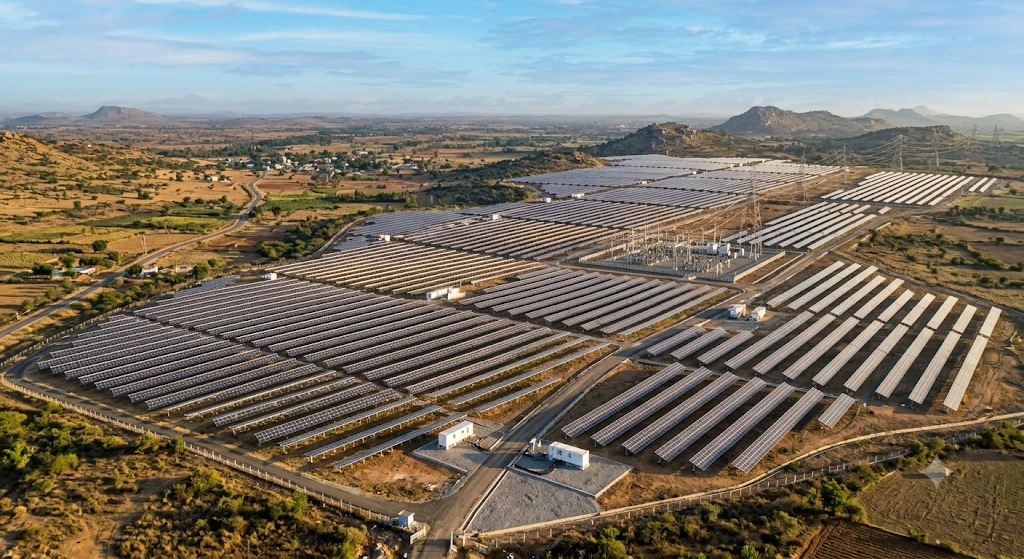
AUSTRIA; BELGIUM —The European Investment Bank (EIB) Group has sanctioned EUR 14 billion in fresh financing following board meetings in Luxembourg, directing roughly a third of the total toward strengthening energy independence across the European Union (EU). The allocation includes EUR 4.2 billion for clean-energy assets spanning district heating and cooling in Austria and Germany, renewable power generation in France, Italy, Spain, and Lithuania, and electricity grid upgrades in Cyprus and Hungary. A further EUR 3.8 billion is earmarked to support enterprise competitiveness, focused primarily on advancing innovation across European businesses.
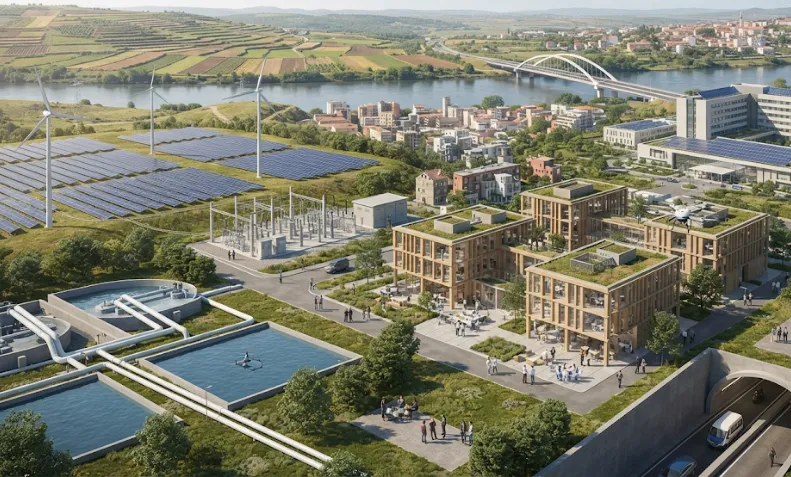
Beyond power networks and corporate innovation, the approved funding covers water resilience in Belgium, new school construction in France, affordable housing in Ireland, and urban infrastructure encompassing education, sports, and transport facilities in Romania. Internationally, the package backs marine plastic waste reduction in Gabon, climate-resilient water systems in Jordan, and climate adaptation alongside rural development in Uzbekistan under the EU's Global Gateway framework. Governing bodies also adopted updated codes of conduct introducing stricter conflict-of-interest rules, cooling-off periods, and expanded oversight duties for the ethics and compliance function, pending final governance sign-off.
Concentrating capital in grid reinforcement, thermal networks, and renewables directly addresses structural bottlenecks that leave EU member states exposed to external energy supply shocks and price volatility. Pairing large-scale energy and civic infrastructure with corporate innovation funding reflects an effort to lower industrial operating costs while accelerating domestic technology adoption. Externally, aligning water, waste, and adaptation projects with Global Gateway priorities ties partner-country resilience to broader European trade and geopolitical positioning.
Utilities, grid operators, renewable developers, construction contractors, and water engineering firms across Europe stand to benefit from near-term project pipelines, while innovative enterprises and mid-caps can access capital through the group's financing channels. In emerging markets such as Gabon, Jordan, and Uzbekistan, public authorities and international project developers gain concessional backing for capital-intensive environmental and municipal works. Internally, stricter ethics and compliance standards raise governance expectations for counterparties, intermediaries, and funded entities interacting with the institution.
For corporate decision-makers and institutional investors, the approvals signal sustained public co-financing in grid modernization, heating decarbonization, and applied industrial innovation, reducing policy and bankability friction in eligible sectors. The European Investment Bank (EIB) Group operates as the financing arm of the European Union (EU) owned by its 27 member states, backed by its subsidiary the European Investment Fund which provides guarantees, securitisation, and equity for smaller enterprises and startups. Companies active in clean energy, urban infrastructure, and deep tech should monitor upcoming project rollouts and align compliance frameworks with heightened institutional scrutiny.