ROMANIA; SWITZERLAND —The European Investment Bank (EIB) has committed €20 million in venture debt financing to Bcomp to fund a large-scale manufacturing facility in Timișoara, Romania, alongside ongoing research and development in Fribourg, Switzerland. The financing underpins a broader €47.6 million investment programme scheduled for execution between 2027 and 2030, with roughly 61% of capital deployment directed toward Romania's western Vest region and the remainder supporting Swiss technical operations.
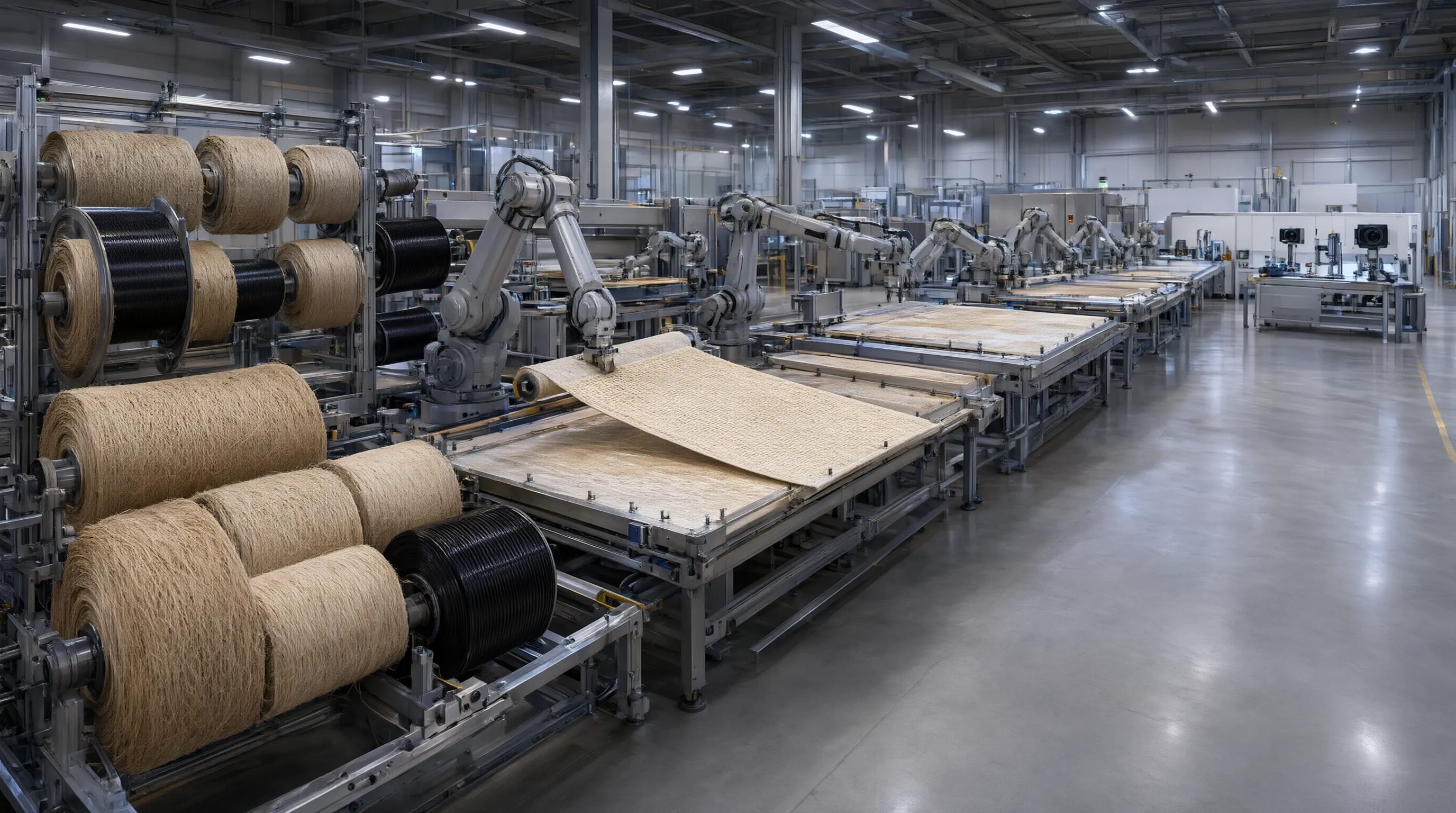
Bcomp is a Swiss cleantech enterprise headquartered in Fribourg that engineers structural composite reinforcements from natural flax fibres as alternatives to conventional carbon fibre, glass fibre, and petroleum-based plastics. Operating across Europe, Asia, and North America, the company supplies lightweight bio-based materials tailored for industrial manufacturing, automotive engineering, motorsport, marine vessels, mass transit, and sporting equipment.
Scaling industrial production of bio-based composites addresses a persistent commercial bottleneck in sustainable manufacturing, where emerging material suppliers often struggle to transition from specialized production runs to high-volume supply. By pairing venture debt with industrial capital expenditure, the transaction helps bridge early-scale financing gaps while expanding regional employment and industrial capacity in western Romania.
For automotive, mobility, and industrial equipment manufacturers facing stricter emissions targets and circularity expectations, natural fibre composites offer an alternative material pathway where weight reduction and lower lifecycle footprint are prioritized. The financing aligns with European Union priorities around climate action, the bioeconomy, territorial cohesion, and industrial innovation under the InvestEU and TechEU frameworks, reinforcing policy momentum toward lower-carbon supply chains.
For corporate buyers and industrial investors, this commitment signals growing institutional credit appetite for capital-intensive bio-material producers capable of meeting industrial throughput standards. Manufacturers evaluating alternatives to carbon and glass fibres may gain expanded supply optionality over the coming investment cycle, while venture and growth investors can benchmark how public risk-sharing mechanisms de-risk hardware scale-up across European industrial hubs.