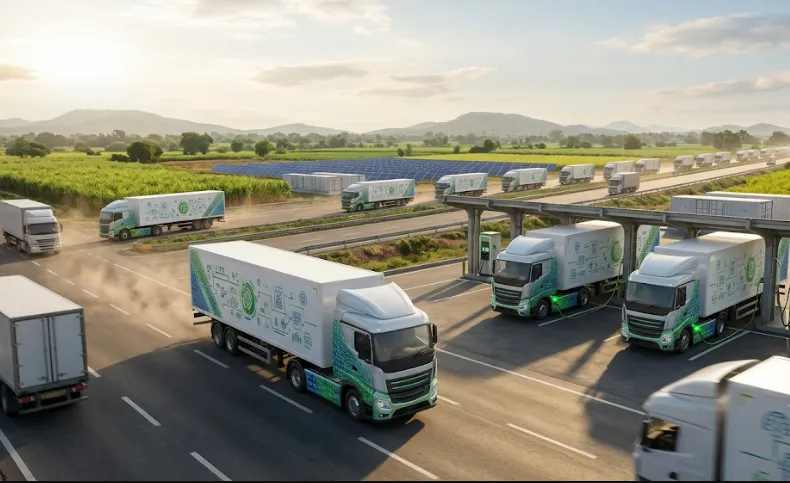
INDIA —Energy In Motion Limited (EIM), an integrated heavy electric mobility ecosystem company, has entered into a Memorandum of Understanding (MoU) with Sorigin Green Mobility Private Limited to roll out 500 electric heavy commercial vehicles over a two-year period across key freight routes in India. The initiative will focus on heavy-duty logistics corridors with high cargo movement, including port ecosystems such as the Jawaharlal Nehru Port Authority. Operations will commence immediately with the deployment of an initial batch of 18 electric heavy commercial vehicles within the Jawaharlal Nehru Port Authority network.
Energy In Motion Limited (EIM) provides integrated electric mobility solutions for long-haul freight transport using heavy-duty electric trucks supported by charging infrastructure and battery swapping. Sorigin Green Mobility Private Limited functions as an OEM-agnostic electric vehicle trucking platform that deploys and maintains commercial fleets for ports and heavy industries under long-term contracts.
The collaboration addresses critical operational and economic barriers in heavy-duty logistics by integrating vehicle manufacturing with supporting energy infrastructure. Under the arrangement, Energy In Motion will supply its Ashwa 55-tonne electric tractors alongside dedicated charging solutions, battery-swapping networks, and energy-management systems. This infrastructure-backed approach is designed to optimize vehicle utilization, curb refueling turnaround times, and lower overall energy costs for fleet operators.
The partnership carries substantial implications for the freight transportation, logistics, and automotive manufacturing sectors as industries face increasing regulatory and corporate pressure to decarbonize heavy-duty supply chains. By utilizing a pay-per-use operational model where customers cover freight moved rather than asset ownership, the initiative lowers upfront capital expenditure barriers for logistics providers.
For commercial fleet operators and industrial supply chains, the deployment offers a scalable pathway to integrate zero-emission vehicles into daily high-utilization duty cycles. Investors and industry stakeholders view large-scale corridor electrification as a vital metric for tracking the commercial viability of heavy commercial electric vehicles in developing markets, with port logistics serving as a high-density testing ground for broader national adoption.