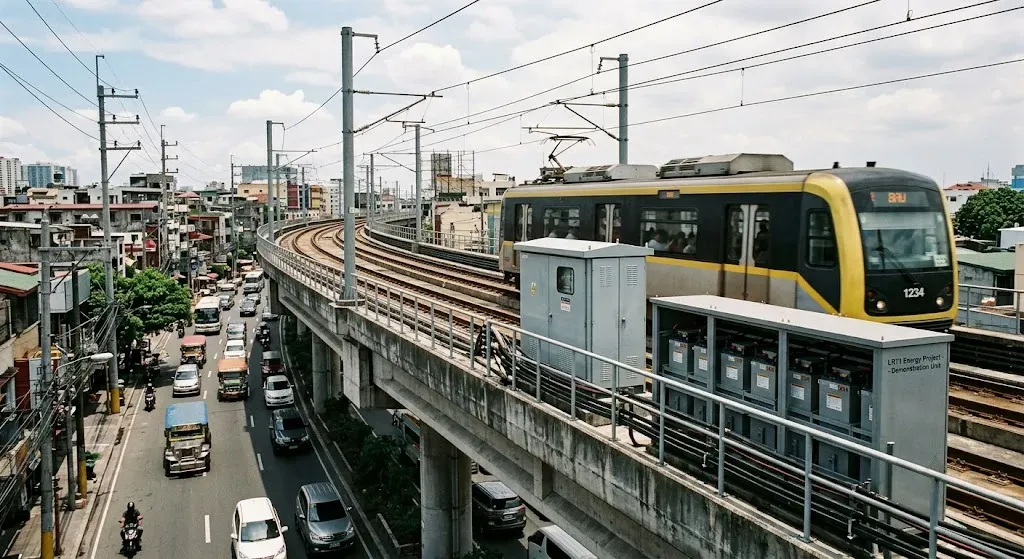
PHILIPPINES —A collaborative initiative has been launched to deploy an energy-saving demonstration project across the LRT1 urban railway system located in Metropolitan Manila. The program focuses on capturing surplus electrical energy produced during train deceleration and braking cycles that is otherwise lost due to a lack of immediate nearby load demand. By introducing specialized equipment to divert this surplus power into station facilities, alongside optimizing substation output voltages and adjusting train control software, operations can achieve lower energy consumption across the entire corridor. This pilot effort builds upon previous measurements and technical evaluations conducted through a dedicated international cooperation framework to identify inefficiencies in regional mass transit networks.
This development carries significant operational and financial weight for urban transit systems operating in densely populated developing regions characterized by elevated electricity tariffs. Metropolitan Manila faces severe traffic congestion, making efficient public transportation an essential policy priority. However, high regional power costs put continuous strain on operational expenditures for transit operators. Recovering roughly half of currently wasted regenerative electricity directly addresses these financial pressures while simultaneously generating monetary savings that can be reinvested into passenger amenities and rolling stock services to attract commuters away from private vehicles.
The undertaking directly affects urban railway operators, municipal transit authorities, and regional equipment suppliers across Southeast Asian markets grappling with high power overheads and rapid urbanization. Industrial stakeholders involved in rolling stock manufacturing, electrical substation engineering, and environmental consultancy will monitor the performance metrics to evaluate scalability. Furthermore, the initiative aligns with international decarbonization mechanisms supported by the Japanese government, which provide financial backing for technologies that simultaneously lower greenhouse gas emissions and address pressing urban environmental challenges.
For corporate strategists and infrastructure investors, the project establishes a scalable operational model for retrofitting existing rail assets with energy recovery systems without requiring complete line overhauls. Success in the Manila corridor could accelerate deployment across other congested Southeast Asian metropolitan areas facing parallel utility cost structures and modal shift mandates. Additionally, participation in such bilateral environmental subsidy programs offers corporate entities a strategic pathway to secure verified emissions reductions while expanding their footprint in emerging market transportation infrastructure.