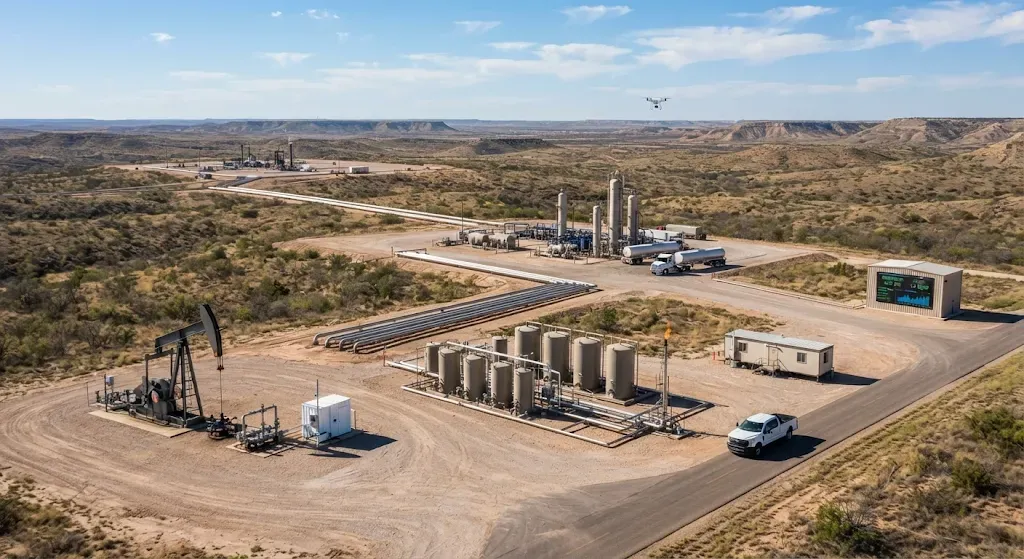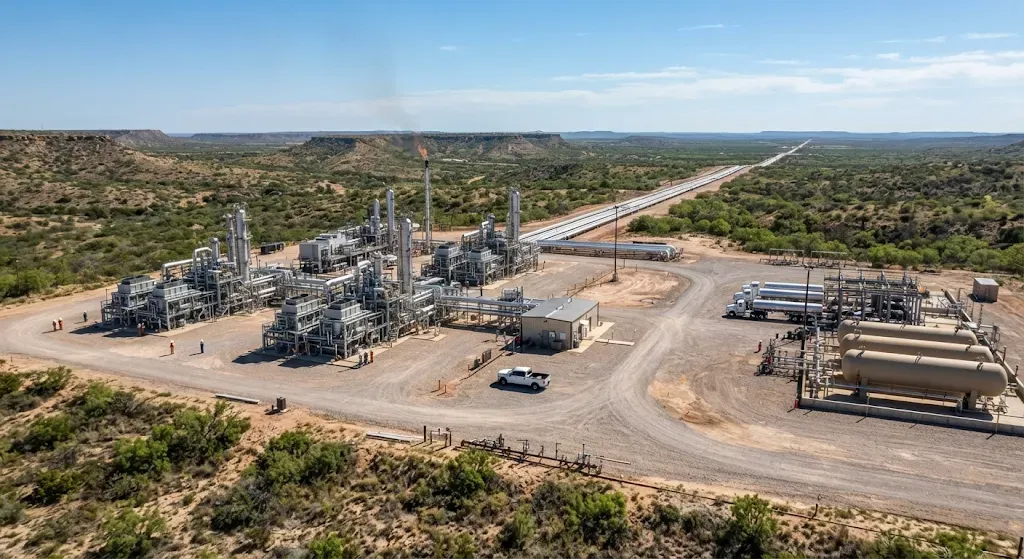
UNITED STATES OF AMERICA —Energy Transfer has finalized its purchase of Vaquero Midstream for $1.95 billion in cash and approximately 33.3 million newly issued common units. The transaction transfers ownership of the Caymus Processing Complex, which comprises three processing trains rated at roughly 675 MMcf/d, alongside approximately 300 miles of pipeline operating across active areas of the Delaware Basin.
Energy Transfer is a publicly traded master limited partnership operating roughly 140,000 miles of pipeline and related energy infrastructure across 44 states. Its core portfolio spans natural gas gathering and processing, intrastate and interstate transport and storage, crude oil, natural gas liquids, and refined products logistics, as well as NGL fractionation and stakes in Sunoco and USA Compression Partners.
Adding dedicated processing capacity and gathering lines in the Delaware Basin increases Energy Transfer's ability to capture rising associated gas and natural gas liquids output from Permian producers. As associated gas volumes grow alongside oil drilling, processing bottlenecks often constrain upstream netbacks and downstream takeaway reliability, making integrated processing and pipeline reach a practical operational priority.
Across the broader midstream sector, the deal reflects ongoing consolidation in core U.S. shale basins aimed at achieving scale efficiencies, improving plant utilization, and linking wellhead production to downstream fractionation and transport corridors. Producers operating in the Delaware Basin face concentrated midstream counterparties, while midstream operators compete to lock in long-term gathering and processing commitments from active drillers.
For investors and commercial stakeholders, the cash-and-unit structure balances upfront capital outlay with equity participation in the combined enterprise. Integrating the Caymus facility and adjacent lines into Energy Transfer's wider Permian and Gulf Coast value chain positions the partnership to pursue throughput growth and network synergies, though execution remains tied to regional drilling activity, commodity spreads, and asset integration performance.