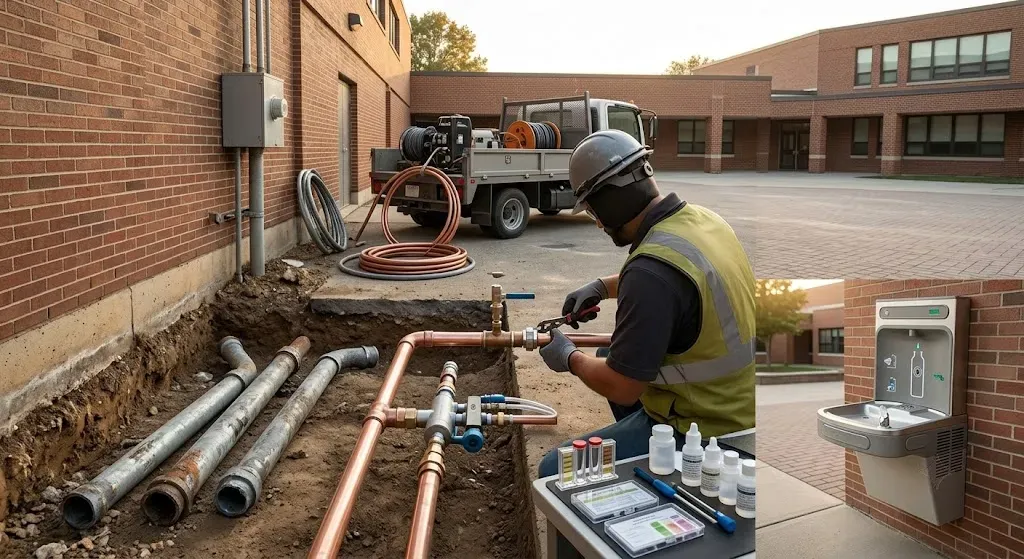
UNITED STATES OF AMERICA —The United States Environmental Protection Agency (EPA) announced a dedicated funding allocation of $26 million aimed at addressing lead pipe infrastructure and water fixtures within educational institutions and child care centers nationwide. The capital distribution is channeled through specific federal grant mechanisms designed to assist state and territorial authorities in identifying and mitigating heavy metal contaminants in public water systems used by minors.
This capital infusion addresses ongoing public health risks associated with legacy plumbing materials, focusing specifically on neurotoxin exposure vectors that disproportionately affect young demographics. By targeting testing protocols and system overhauls in local facilities, the federal program seeks to minimize environmental health hazards in high-density community spaces where children consume drinking water daily.
For municipal authorities, local educational agencies, and specialized contractors, this directive initiates an active cycle of compliance testing, infrastructure auditing, and remediation execution. Organizations operating child care networks and public school systems must coordinate with state administrators to access allotted resources, driving demand for specialized water testing laboratories, plumbing retrofits, and certified filtration equipment vendors.
From an enterprise risk perspective, proactive mitigation of waterborne neurotoxins reduces long-term liability for institutional operators and local governments. Investors monitoring municipal bond markets and environmental service sectors can anticipate increased public expenditures directed toward utility modernization, public health compliance, and educational facility management over the upcoming fiscal periods.