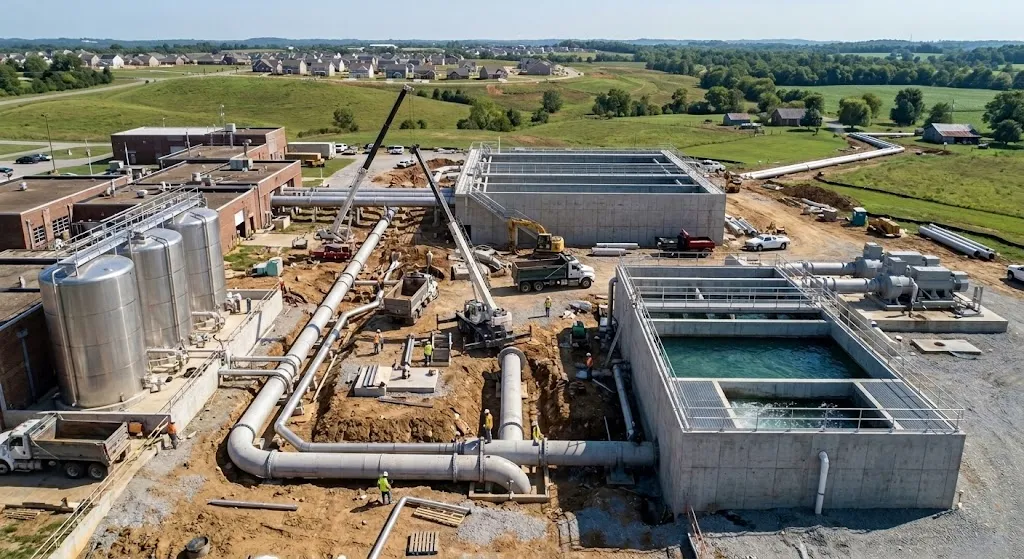
UNITED STATES OF AMERICA —The United States Environmental Protection Agency has authorized a $272 million Water Infrastructure Finance and Innovation Act loan for the city of Columbia, Tennessee. The capital allocation is designated for the municipality's Long Term Water Supply Program, which encompasses the construction of a new raw water intake facility, a dedicated transmission main, and comprehensive upgrades to the existing water treatment infrastructure. This financing mechanism is structured to provide customized repayment schedules, optimizing long-term fiscal efficiency for the local government while accelerating project deployment.
This development is strategically significant as it addresses the compounding infrastructure demands of a rapidly expanding regional population, currently estimated at 50,000 residents. By securing dedicated federal financing, the municipality mitigates the fiscal burden of large-scale capital projects, ensuring uninterrupted delivery of safe drinking water. The initiative directly supports both urban expansion and the integration of adjacent rural communities into a reliable municipal utility network, fostering broader regional economic stability and public health resilience.
The broader water and sanitation sector will observe this transaction as a benchmark for federal infrastructure financing. The Water Infrastructure Finance and Innovation Act program continues to serve as a critical policy tool for bridging the national water infrastructure funding gap. By enabling flexible repayment structures, the policy framework encourages mid-sized municipalities to pursue necessary, large-scale modernization projects that might otherwise be deferred due to immediate budget constraints or prohibitive commercial borrowing costs in the current macroeconomic environment.
For investors and municipal stakeholders, this allocation signals sustained federal commitment to domestic water infrastructure resilience. The United States Environmental Protection Agency operates as the primary federal regulatory and funding body for environmental protection initiatives. The city of Columbia functions as a growing municipal entity in Tennessee requiring scalable utility services. The anticipated construction phase will stimulate local economic activity and generate employment opportunities, while engineering and construction firms specializing in water treatment infrastructure stand to benefit directly from the ensuing procurement cycles.