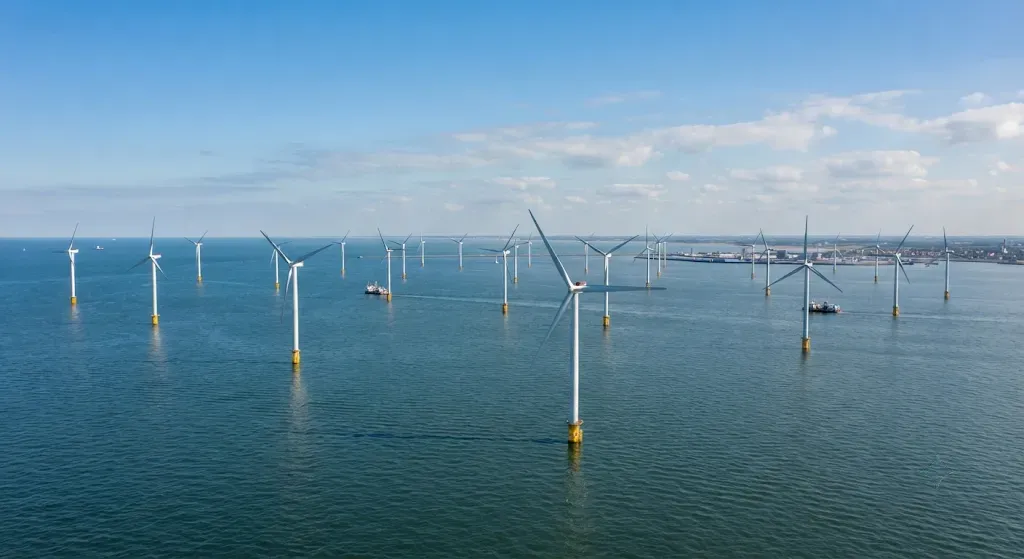
BELGIUM —Belgium has secured regulatory approval from the European Commission for a financial support package valued at EUR 2.04 billion dedicated to offshore wind infrastructure expansion. The European Commission is the executive arm of the European Union responsible for proposing legislation, enforcing EU law, and monitoring policy implementation. The newly sanctioned scheme supersedes an earlier arrangement initially cleared under a temporary crisis framework that lapsed following the expiration of its legal deployment window. Structured to function across a twenty-year operational timeline, the initiative centers on facilitating the development of the primary offshore wind asset within the designated maritime zone in the North Sea.
The core objective of the financial instrument is to stimulate industrial decarbonization and enhance long-term regional energy security. By bolstering domestic renewable electricity output, the framework directly addresses structural dependencies on external energy imports. The strategy aligns with broader regulatory objectives designed to accelerate the transition toward a net-zero economic model while ensuring that industrial energy supplies remain resilient against external geopolitical shocks. Strategic policy alignment focuses on scaling up clean power infrastructure to support both commercial users and domestic grids.
Industrial stakeholders across the energy and manufacturing sectors face distinct operational shifts under the approved parameters. The funding mechanism mandates strict supply chain diversification criteria derived from the Net Zero Industry Act, compelling developers to mitigate dependencies on non-European component imports for major wind turbine assemblies. Procurement will proceed through a competitive bidding process scheduled for execution, utilizing a capability-based two-way contract for difference model. This structure calculates compensation against reference market values while preventing subsidies during negative pricing intervals, thereby protecting market stability.
For corporate entities, institutional investors, and energy developers, the regulatory green light offers clear market visibility regarding long-term renewable infrastructure commitments in Western Europe. Capital allocation will be heavily influenced by the structured bidding parameters and compliance requirements tied to regional manufacturing resilience. Energy market participants must adapt bidding strategies to account for capability-weighted remuneration models, altering how long-term revenue projections and risk profiles are evaluated for large-scale maritime renewable assets.