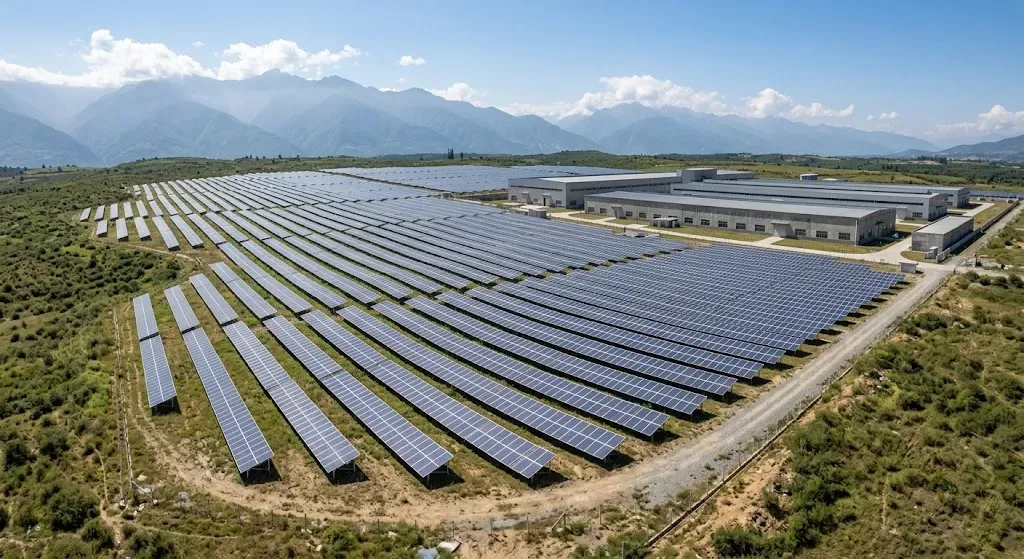
ROMANIA —The European Investment Bank (EIB) has extended a €100 million debt commitment to support the construction and operation of Dama Solar, a major photovoltaic generation facility located in Arad County, Romania. Developed by regional independent power producer Rezolv Energy, the initiative carries an estimated total cost of €728 million and represents a significant expansion of renewable energy infrastructure in Southeastern Europe. Anchored by backing from the InvestEU scheme, the financing facility underpins the project's broader capital structure and facilitates grid connection to the national high-voltage transmission network.
Rezolv Energy, established in 2022 by sustainable infrastructure investor Actis, manages an operational and development pipeline exceeding 2.8 gigawatts across the region. The European Investment Bank (EIB) functions as the lending arm of the European Union, channeling capital into climate action, regional development, and strategic infrastructure across member states. This latest credit allocation aligns with European objectives to diversify power generation and meet expanding decarbonization targets.
With a planned peak capacity of 1.3 gigawatts, the project is designed to generate sufficient clean power to cover the electrical demands of approximately 280,000 households annually. Commercial viability is supported by a dual revenue strategy, including two 15-year Contracts for Difference securing 520 megawatts of capacity alongside direct long-term corporate power purchase agreements with commercial and industrial off-takers. Additionally, the development includes local land restoration initiatives spanning an 82-hectare nature reserve alongside livestock grazing to maintain vegetation.
The investment addresses growing European demand for utility-scale clean power while bolstering energy independence in Central and Eastern Europe. Over a three-year implementation window, peak construction activities are projected to create more than 1,500 direct jobs, driving regional economic growth within an EU cohesion territory. By scaling domestic generation capacity, the facility mitigates reliance on fossil fuels, stabilizes market supply for corporate consumers, and expands the footprint of bankable renewable infrastructure across emerging EU markets.