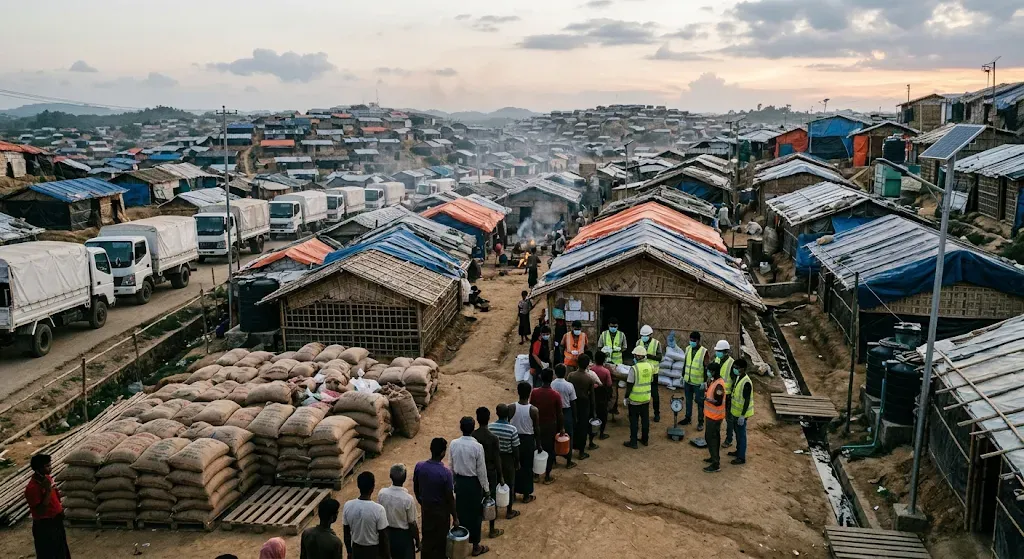
BANGLADESH; BELGIUM —The European Union has sanctioned an additional EUR 16 million in emergency financial support to stabilize vulnerable populations affected by the protracted civil conflict in Myanmar, alongside displaced Rohingya communities and domestic host populations residing in Bangladesh. The injection of capital responds directly to compounding pressures, including escalating security disruptions, severe food insecurity exacerbated by macroeconomic shifts, and the anticipated impacts of climatic phenomena such as Super El Nino. Funding allocations for operations within Myanmar concentrate heavily on nutritional support, emergency food supply chains, and localized healthcare provisions. Meanwhile, relief efforts directed toward Bangladesh prioritize essential protection services, medical infrastructure, and food security measures to maintain basic survival standards inside densely populated refugee camps experiencing continuous influxes of new arrivals.
This financial allocation operates as a strategic supplement to broader regional fiscal commitments deployed earlier in the year. Since January, more than EUR 50 million has been channeled into addressing the multidimensional crisis across Myanmar and its surrounding spillover zones, including Thailand, Malaysia, Indonesia, and India. Furthermore, this latest tranche builds upon a separate allocation exceeding EUR 23 million previously dedicated to Bangladeshi humanitarian frameworks within the same annual cycle. These disbursements underscore a sustained policy objective to mitigate massive regional displacement, given that internal upheaval in Myanmar has displaced upward of 4 million individuals domestically, while approximately 1.2 million refugees remain encamped in precarious conditions across neighboring territories.
For multinational corporations, logistics operators, and institutional investors monitoring geopolitical stability and operational continuity across Southeast Asia, these funding allocations highlight ongoing structural risks in regional supply chains and labor markets. Persistent conflict and severe displacement undermine local economic productivity and increase operational volatility for enterprises operating in affected corridors. Financial institutions and corporate risk management divisions must account for elevated socioeconomic instability, potential trade disruptions, and regulatory compliance complexities when evaluating cross-border investments or supply dependencies tied to the region.
The European Commission is the executive arm of the European Union, responsible for proposing legislation, enforcing EU law, and managing routine administrative operations and budgetary programs across member states. As one of the world's leading institutional donors for international development and emergency relief, the organization coordinates large-scale humanitarian interventions globally to address geopolitical crises, natural disasters, and structural displacement.